Many English learners—and even native speakers—pause when deciding between swam or swum. Both words come from the same verb, swim. Both sound natural in conversation. Yet only one is correct in certain sentences. This small difference causes confusion in emails, school assignments, exams, and everyday speech.
People search for swam or swum because English verb forms are not always logical. Past tense and past participle sound like complex grammar terms, but the actual problem is simple.
You may often hear people say “I have swam before” in casual speech, but teachers and grammar guides mark it as incorrect. Spellcheck usually does not explain the mistake, which leads to doubt and second guessing.
The confusion grows because English has many irregular verbs that change their form instead of adding “-ed.” Words like ran, eaten, gone, and driven follow similar patterns. Without clear rules, learners rely on what sounds right, which is not always correct.
This article clears everything up step by step. First, you will get a quick and clear answer. Then you will learn the origin of swam and swum, why English keeps two forms, and how both British and American English use them.
You will also see common mistakes, real-life examples, FAQs, and usage tips. By the end, you will know exactly when to use swam and when to use swum, without guessing.
Swam or Swum – Quick Answer
The difference is based on tense, not spelling.
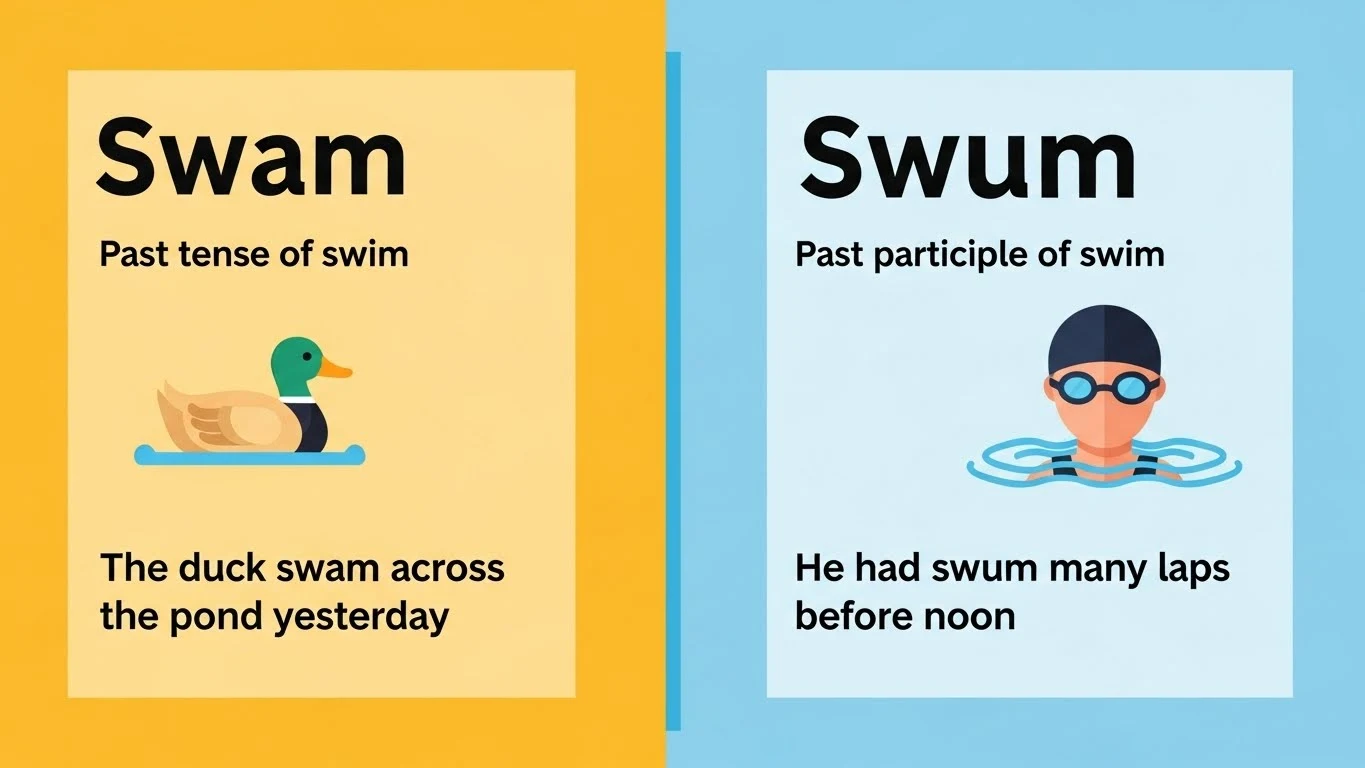
Swam = simple past tense
Swum = past participle
Examples:
- I swam in the river yesterday.
- I have swum in the river before.
Simple rule to remember:
👉 If the sentence has have, has, or had, use swum.
👉 If the action happened in the past and stands alone, use swam.
This one rule solves most confusion.
learn more:Genious or Genius: Which Spelling Is Correct and Why It Matters
Understanding Past Tense vs Past Participle (Simple Explanation)
- Past tense tells what happened before now.
- Yesterday, last night, two years ago
- Past participle works with helping verbs like:
- have, has, had
Think of it this way:
- No helping verb → swam
- Helping verb present → swum
The Origin of Swam or Swum
The verb swim comes from Old English swimman. It belongs to a group called strong verbs. Strong verbs change their vowel sound instead of adding “-ed” to form the past.
This pattern is very old and still survives in modern English.
Verb forms:
- Present: swim
- Past: swam
- Past participle: swum
Similar examples include:
- sing → sang → sung
- drink → drank → drunk
- begin → began → begun
English kept these forms over centuries, which is why both swam and swum still exist today.
British English vs American English Usage
Many learners expect spelling or grammar differences between British and American English, but swam and swum are the same everywhere.
| Form | British English | American English |
| swam | same use | same use |
| swum | same use | same use |
There is no regional difference. Grammar rules for swam or swum are global and consistent.
Which One Should You Use?
Use this quick checklist:
- Talking about a completed past action? → swam
- Using have / has / had? → swum
- Writing for US, UK, or global readers? → Same rule applies
- Formal or informal writing? → Same grammar applies
Examples:
- She swam after school.
- She has swum competitively for years.
Common Mistakes with Swam or Swum
Many mistakes happen in casual speech and then appear in writing.
❌ I have swam before
✅ I have swum before
❌ They had swam all morning
✅ They had swum all morning
❌ He has swam very fast
✅ He has swum very fast
❌ Mixing both forms incorrectly
✅ Stay consistent with tense rules
A good habit is to quickly check for helping verbs before choosing.
Swam or Swum in Everyday Examples
Emails
- I swam after work yesterday.
News
- The athlete has swum across the channel.
Social Media
- Just swam my first mile today!
Formal Writing
- Participants had swum for over an hour before resting.
Conversation
- Have you ever swum in the sea?
Swam or Swum – Usage Trends
Search interest for swam or swum remains steady worldwide. It often increases during:
- School terms
- Exam seasons
- English grammar lessons
The highest searches come from:
- United States
- United Kingdom
- India
- Australia
Most users search to confirm grammar rules and correct commonly heard speech errors.
Swam vs Swum: Side-by-Side Comparison
| Word | Tense | Example |
| swam | simple past | I swam yesterday. |
| swum | past participle | I have swum before. |
FAQs About Swam or Swum
1. Is “I have swam” correct?
No. The correct form is I have swum.
2. Can swum be used alone?
No. It must be used with have, has, or had.
3. Is swam ever wrong?
Yes, when used with a helping verb.
4. Are these rules changing?
No. They are stable and well established.
5. Do native speakers make this mistake?
Yes, especially in casual speech.
6. Is swim a regular verb?
No. It is an irregular (strong) verb.
7. Does this differ by country?
No. The rule is the same worldwide.
Conclusion
The difference between swam or swum is simple once you understand the rule. Swam describes a completed action in the past. Swum works only with helping verbs like have, has, or had. Both forms come from the same verb but serve different grammatical roles.
There is no British or American spelling difference, and the grammar stays the same everywhere. Most mistakes happen in casual speech, but correct writing depends on using the right form. Always remember the key check: if you see have, use swum. If not, swam is usually correct.
Mastering this small grammar rule helps your English sound natural, clear, and confident. With practice, choosing between swam and swum becomes automatic.

Olga Tokarczuk is a Polish novelist and essayist whose work is widely studied for its rich vocabulary, precise language, and literary expression. Her writings are often referenced in academic and linguistic contexts for their clarity of diction and thoughtful use of words. She is a prominent figure in modern world literature.