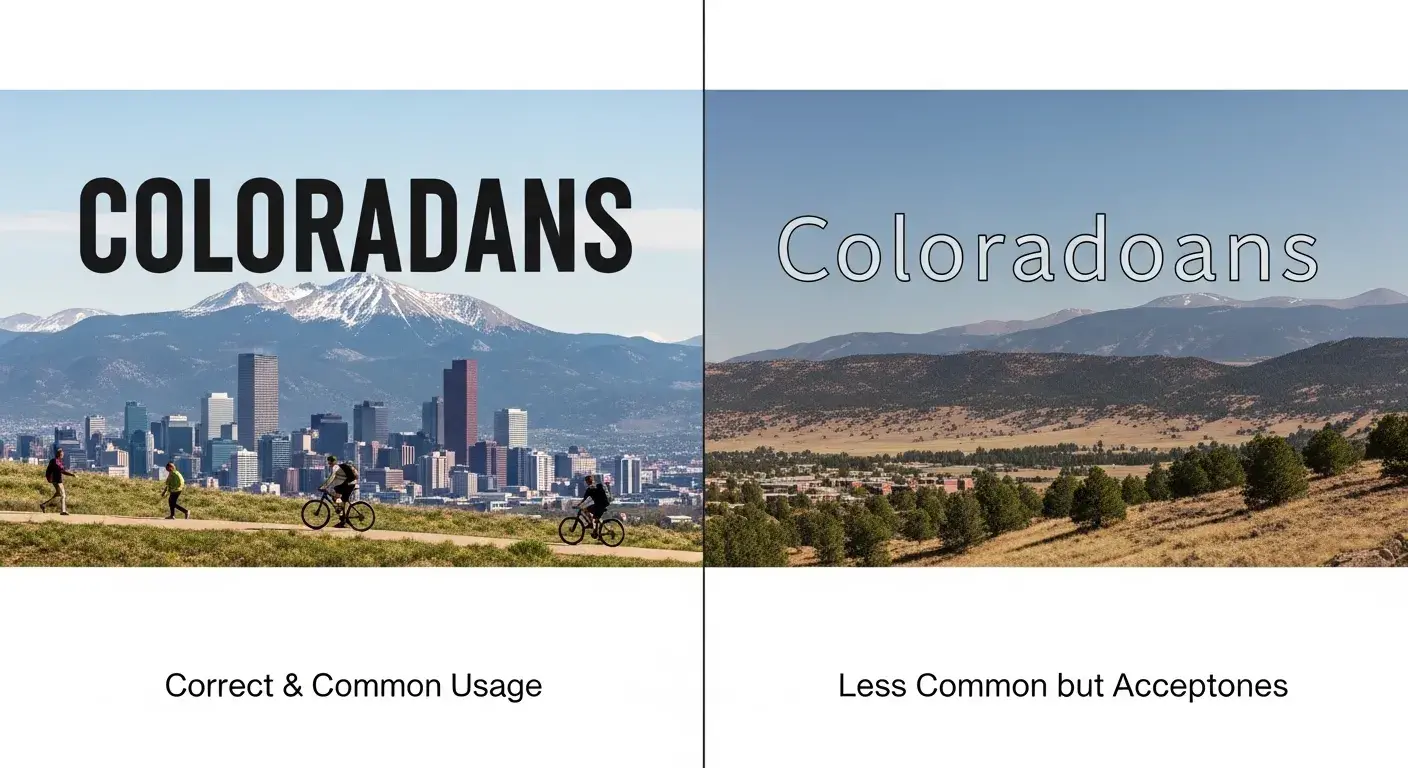
Coloradoans is the officially recognized and preferred term for people from Colorado, while Coloradans is an informal variant that also appears in common use.
His quick answer solves the main confusion, but many writers still hesitate when choosing between coloradans or coloradoans.
People search this keyword because both spellings appear online. You may see Coloradoans in government writing and dictionaries, while Coloradans shows up in news headlines, blogs, and casual speech. Since both forms look correct, writers are unsure which one to trust.
This confusion matters more than it seems. Using the wrong term can look unprofessional in formal writing, academic work, or official documents. At the same time, overly formal language may feel awkward in casual or social media writing.
Another reason for confusion is that English does not always follow one clear rule for forming demonyms (words for people from a place). Some states use “-an,” some use “-ian,” and others break patterns entirely.
This article clears everything up. You will learn the correct spelling, where both words come from, how American and British English treat them, which one you should use based on audience, and how to avoid common mistakes. By the end, you will know exactly which word to choose and why.
Coloradans or Coloradoans – Quick Answer
Coloradoans is the correct and officially accepted term for people who live in or come from Colorado.
Coloradans is a shorter, informal version that is commonly used but less formal.
Examples:
- Coloradoans value outdoor lifestyles.
- Many Coloradans enjoy hiking and skiing.
Meaning of Coloradans or Coloradoans
Coloradans and Coloradoans both mean people who live in or come from the U.S. state of Colorado.
There is no difference in meaning between the two words.
Simple rule:
Formal or official writing = Coloradoans
Casual or conversational writing = Coloradans
The Origin of Coloradans or Coloradoans
The name Colorado comes from Spanish, meaning “colored red,” referring to the region’s red earth and rock formations.
The demonym Coloradoan follows a common English pattern of adding -an to a place name. This form appeared in official records, newspapers, and government writing in the 19th century.
Over time, people naturally shortened the word in speech. This led to the informal version Coloradan, and later its plural Coloradans.
So the difference exists because of natural language simplification, not spelling rules. One form became official. The other became popular.
British English vs American English Spelling
This topic is mainly American, since Colorado is a U.S. state.
| Form | American English | British English | Notes |
| Coloradoans | ✅ Preferred | ✅ Acceptable | Formal, official |
| Coloradans | ✅ Informal | ⚠️ Less common | Casual usage |
British English does not have a strong preference, but style guides and formal writing still favor Coloradoans.
Which Spelling Should You Use?
Choose based on audience and tone.
Use Coloradoans when:
- Writing formally
- Creating academic content
- Publishing news articles
- Writing legal or government documents
- Teaching or explaining language
Use Coloradans when:
- Writing blogs or opinion pieces
- Posting on social media
- Writing casually or conversationally
- Quoting spoken language
Professional advice:
If you are unsure, use Coloradoans. It is always safe.
Common Mistakes with Coloradans or Coloradoans
❌ Coloradoians are proud of their state.
✅ Coloradoans are proud of their state.
❌ The Coloradan’s culture is unique. (singular misuse)
✅ The Coloradoan’s culture is unique.
❌ Coloradens love the mountains.
✅ Coloradans love the mountains.
Why mistakes happen:
- Overthinking spelling
- Confusing demonyms with adjectives
- Guessing instead of checking usage
Coloradans or Coloradoans in Everyday Examples

Emails
- Many Coloradoans attended the meeting.
News
- Coloradoans voted in large numbers this election.
Social Media
- Coloradans love sunny days and mountain views
Formal Writing
- The study surveyed 500 Coloradoans across rural areas.
Marketing / Blogs
- Coloradans know the value of fresh air and open space.
Coloradans or Coloradoans – Google Trends & Usage Data
Search data shows that Coloradoans appears more often in:
- Government websites
- Educational content
- Formal publications
Coloradans appears more in:
- Blogs
- Social media
- Headlines
- Spoken quotes
Globally, people searching this term are usually checking:
- Correct spelling
- Professional usage
- Editorial standards
This confirms that user intent is clarity, not preference.
Comparison Table: Coloradans vs Coloradoans
| Term | Correct | Formality | Best Used In |
| Coloradoans | ✅ Yes | Formal | Official, academic, news |
| Coloradans | ✅ Yes | Informal | Blogs, casual writing |
FAQs
1. Is Coloradans wrong?
No. It is informal but widely used.
2. Which word do dictionaries prefer?
Most dictionaries list Coloradoan as the primary form.
3. Which spelling is better for content writing?
Use Coloradoans first, then mention Coloradans.
4. Can I use both in the same article?
Yes, but be consistent and explain the difference.
5. What do newspapers use?
Most major outlets prefer Coloradoans.
6. Is Coloradans acceptable in speech?
Yes. It sounds natural in conversation.
7. What should students use?
Students should use Coloradoans in academic writing.
Conclusion
The confusion between coloradans or coloradoans comes from usage, not correctness. Both words exist, but they serve different purposes. Coloradoans is the official and formal term recognized by dictionaries and style guides. Coloradans is a shortened, informal version that appears often in casual writing and speech.
There is no regional spelling difference here. The choice depends on tone and audience, not British versus American English. When writing professionally, academically, or officially, Coloradoans is the better choice. When writing casually or conversationally, Coloradans feels more natural.
If you remember one rule, remember this:
Formal = Coloradoans
Casual = Coloradans
Using the correct form improves clarity, credibility, and confidence in your writing.
Learn more about:
Handsome or Hansom: What’s the Difference? (2026)

I am Olga Tokarczuk, a Polish novelist and essayist whose work is widely studied for its rich vocabulary, precise language, and literary expression. My writings are often referenced in academic and linguistic contexts for their clarity of diction and thoughtful use of words. I am a prominent figure in modern world literature.