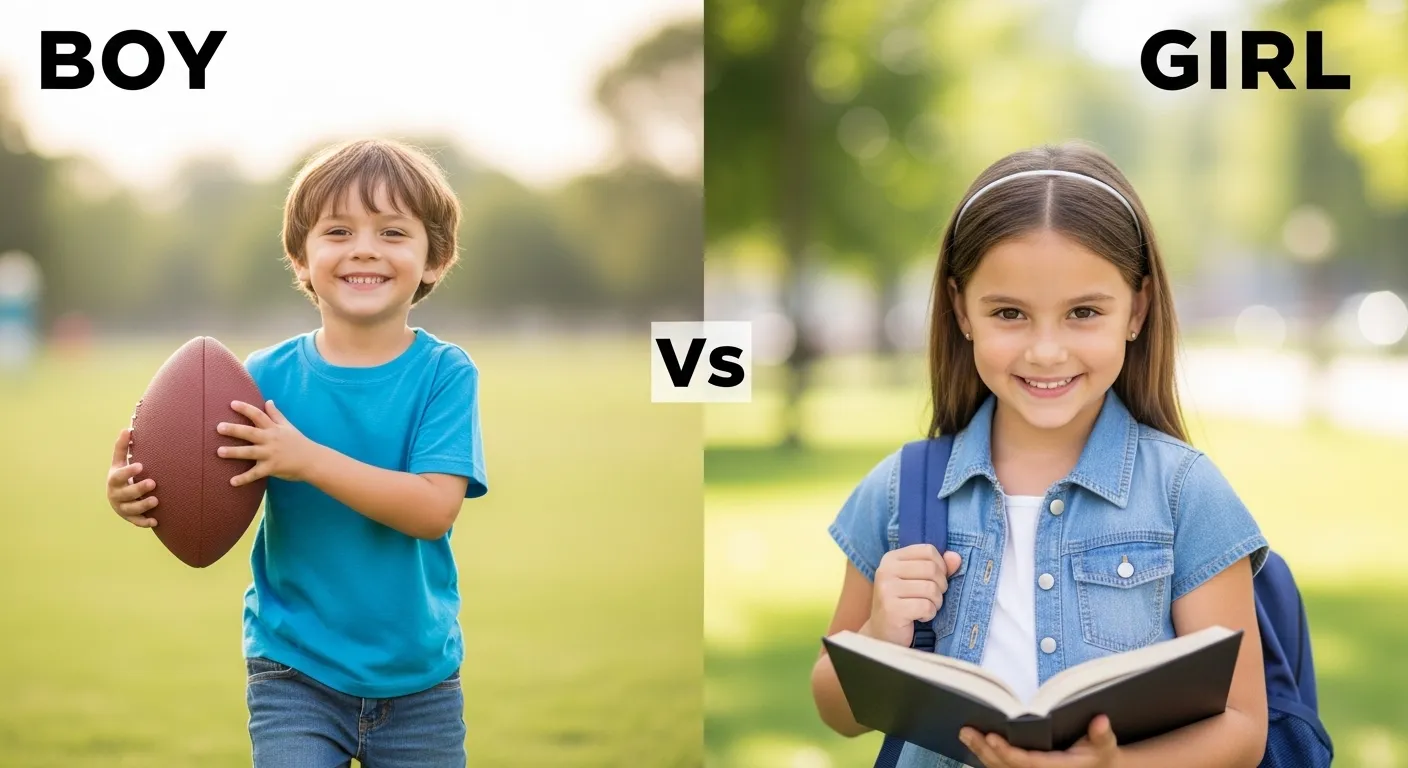
Boy means a male child or young man. Girl means a female child or young woman.
People search for “boy or girl” because they feel unsure which word to use in writing and speaking.
The confusion often appears in school work, parenting blogs, news stories, and daily chats. Some people are unsure about age limits.
Others are unsure when to use boy, girl, man, or woman. Many also want to use polite and respectful language in modern English.
This topic is common in forms, surveys, baby announcements, and social media posts. Small word choices can change meaning or tone.
For example, calling an adult woman a “girl” can sound casual or rude in some contexts. In other cases, people mix these words in formal writing.
This article clears the confusion in simple words. You will get a quick answer first. Then you will learn where these words come from, how British and American English use them, common mistakes, real-life examples, and usage trends. By the end, you will know when to use boy and when to use girl clearly and politely.
Boy or Girl – Quick Answer
Boy = male child or young man
Girl = female child or young woman
Examples:
- The boy is playing football. ✅
- The girl is reading a book. ✅
- He is a boy (for a child). ✅
- She is a girl (for a child). ✅
Simple rule:
If the child is male → use boy
If the child is female → use girl
The Origin of Boy or Girl
The word boy comes from Middle English boie, used for young males. Over time, it became the standard word for a male child.
The word girl comes from Middle English gerle, which once meant a young person of any gender. Later, English fixed its meaning to female children.
There are no spelling differences here. The confusion is about meaning and social use, not spelling. The words changed in meaning over time because society changed how it names age and gender.
British English vs American English Spelling
There is no spelling difference in British and American English.
Both use:
| Word | British English | American English |
| Boy | Boy ✅ | Boy ✅ |
| Girl | Girl ✅ | Girl ✅ |
The difference is tone, not spelling. In both regions, calling adults “boy” or “girl” can sound informal or rude in formal writing.
Which Spelling Should You Use?
This choice is simple:
- US audience: Use boy and girl for children
- UK audience: Use boy and girl for children
- Commonwealth: Same rule
- Global audience: Same rule
Tip:
For adults, prefer man and woman in formal writing.
Common Mistakes with Boy or Girl
❌ Calling an adult woman a “girl” in formal writing
✅ Use “woman” in formal or professional text
❌ Calling an adult man a “boy” in serious writing
✅ Use “man”
❌ Using “boy or girl” for adults
✅ Use “man or woman”
❌ Using these words in sensitive topics without care
✅ Use respectful and clear language
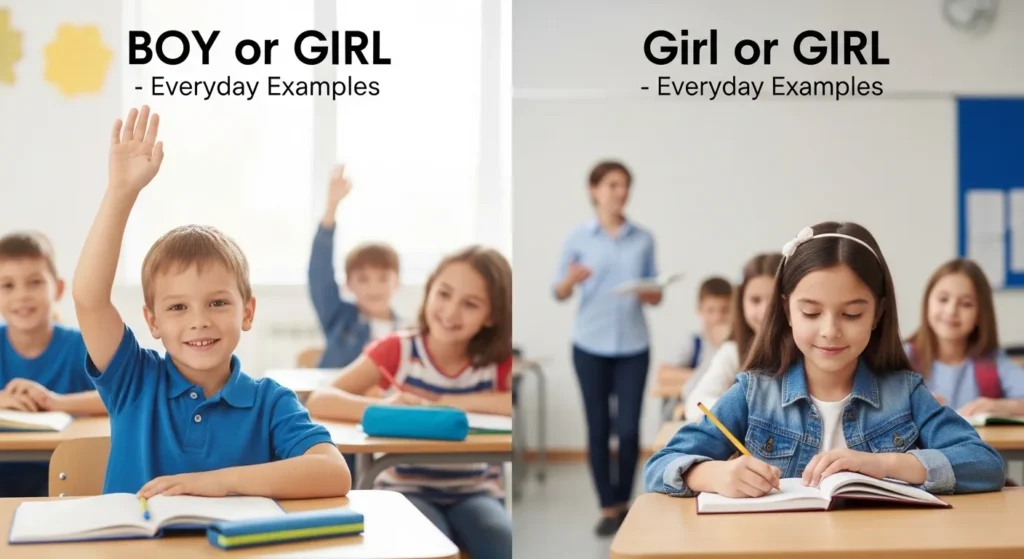
Boy or Girl in Everyday Examples
Emails:
- The boy in class needs help.
- The girl submitted her homework.
News:
- The boy was found safe.
- The girl won the contest.
Social Media:
- My baby is a boy!
- Our little girl is smiling.
Formal Writing:
- The study includes one boy and one girl.
Boy or Girl – Google Trends & Usage Data
Search trends show that “boy or girl” is common in:
- Parenting searches
- Pregnancy and baby planning
- School forms
- Social media posts
People in South Asia, the US, the UK, and the Middle East often search this phrase. The interest rises during pregnancy seasons and baby-related events. In content writing, this keyword is popular for parenting blogs and education sites.
Boy or Girl Comparison Table
| Feature | Boy | Girl |
| Gender | Male | Female |
| Age group | Child / young person | Child / young person |
| Formal use | For children only | For children only |
| Adult form | Man | Woman |
| Correct usage | Yes | Yes |
FAQs About Boy or Girl
- Is “boy or girl” correct English?
Yes. It is correct when talking about children. - Can I call an adult woman a girl?
In casual talk, yes. In formal writing, use woman. - Can I call an adult man a boy?
In jokes, maybe. In formal writing, use man. - Is there any spelling difference in UK vs US English?
No. Both use the same spelling. - Is “boy or girl” used in forms and surveys?
Yes. It is common in forms about children. - What is more polite in formal writing?
Use man and woman for adults. - Is “boy or girl” okay for baby announcements?
Yes. It is very common and natural.
Conclusion
The choice between boy or girl is simple when you know the rule. A boy is a male child. A girl is a female child. The confusion comes from tone and age, not spelling. In both British and American English, the spelling is the same. The real issue is using the right word for the right age and situation.
In daily life, these words appear in emails, school work, news, and social posts. They are normal and correct when used for children. In formal writing, it is better to use man and woman for adults. This small change makes your writing sound more respectful and professional.
If you remember one thing, remember this:
Children = boy or girl. Adults = man or woman.
This simple rule will help you avoid mistakes, sound natural, and write clearly in any setting.
Learn more related article:
Leafs or Leaves: Which Is Correct and When to Use It?

I am Robert Tressell, the pen name of Robert Noonan, a British–Irish novelist and political writer. I am best known for my novel The Ragged-Trousered Philanthropists, which presents a strong depiction of working-class life and social inequality. My work remains influential in English literature and social thought.