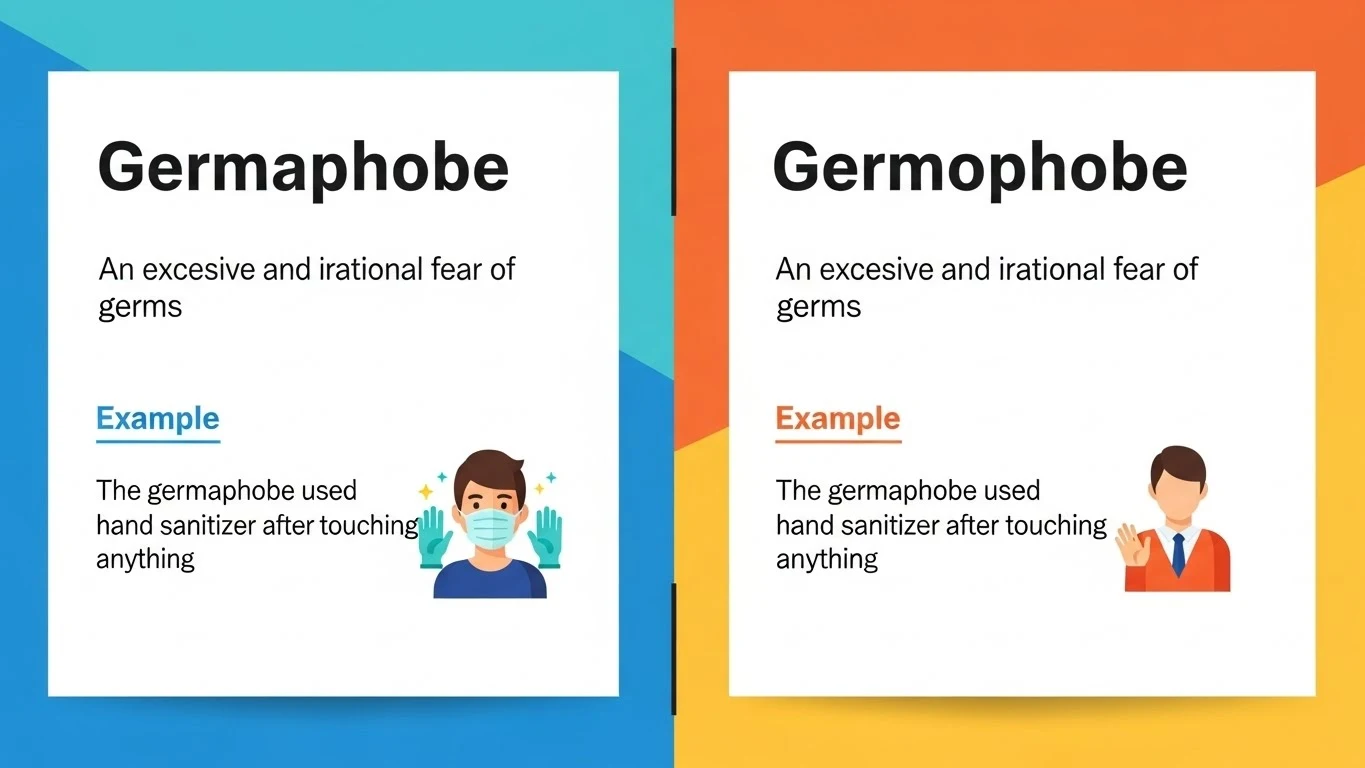
Have you ever typed germaphobe or germophobe into Google and paused, unsure which spelling is right? You are not alone. Thousands of people search this phrase every month. The confusion is real, common, and understandable.
Both spellings look correct. Both appear online. Both are used in articles, emails, and social posts.
Yet writers, students, and professionals still wonder which one to choose. Is one American and the other British? Is one outdated? Or are they both acceptable?
This article solves that problem fast. It gives a clear answer first, then explains why the confusion exists.
a
By the end, you will know exactly when to use germaphobe and when germophobe makes more sense. No guessing. No second thoughts.
Germaphobe or Germophobe – Quick Answer
Both germaphobe and germophobe are correct spellings.
They describe a person who fears germs, dirt, or contamination.
Example:
- He is a germaphobe and washes his hands often.
- She jokes that she is a germophobe during flu season.
The difference is spelling preference, not meaning.
The Origin of Germaphobe or Germophobe
The word comes from two parts:
- germ – meaning microorganism
- -phobe / -phobia – from Greek phobos, meaning fear
Originally, the Greek-based ending was spelled -phobe. Over time, English simplified some spellings. This led to -phobe becoming -phobe in American usage.
That is why both spellings exist today.
Read about: Digitize or Digitalize: What’s the Difference ?
British English vs American English Spelling
American English often drops extra letters. British English keeps traditional forms.
Spelling Comparison Table
| Variant | Spelling | Common Region |
| Germaphobe | -phobe | United States |
| Germophobe | -phobe | UK, Australia, Canada |
Examples:
- US: He calls himself a germaphobe.
- UK: She is described as a germophobe in the article.
Which Spelling Should You Use?
Choose based on your audience.
- US audience → Use germaphobe
- UK or Commonwealth audience → Use germophobe
- Global audience → Either is fine, but germaphobe is more common online
Consistency matters more than the choice itself.
Common Mistakes with Germaphobe or Germophobe
Here are frequent errors:
- ❌ germ-a-phobe (hyphens not needed)
- ❌ germaphobic person (better: person with germophobia)
- ❌ Mixing spellings in one article
Correct usage:
- ✅ He is a germaphobe.
- ✅ She has germophobia.
Germaphobe or Germophobe in Everyday Examples
Email:
- Sorry, I’m a bit of a germaphobe about shared keyboards.
News:
- The actor admits he is a germaphobe on set.
Social Media:
- Anyone else turn into a germaphobe during winter?
Formal Writing:
- The subject displayed germaphobe-like behavior.
Germaphobe or Germophobe – Google Trends & Usage Data
Search trends show germaphobe is more popular worldwide. The US leads usage, followed by Canada and India. Germophobe appears more often in UK-based publications and academic writing.
Context matters too. Casual writing favors germaphobe. Formal or British content leans toward germophobe.
Keyword Comparison Table
| Feature | Germaphobe | Germophobe |
| Meaning | Same | Same |
| American English | Preferred | Rare |
| British English | Acceptable | Preferred |
| SEO popularity | Higher | Lower |
FAQs
1. Are germaphobe and germophobe the same?
Yes. They mean the same thing.
2. Is one spelling wrong?
No. Both are correct.
3. Which spelling does Google prefer?
Germaphobe appears more in search results.
4. Is germophobia a medical term?
Yes. It describes fear of germs.
5. Can I use both spellings together?
No. Pick one and stay consistent.
6. Which spelling is better for blogs?
Germaphobe works better for global SEO.
7. Is germaphobe offensive?
No. It is usually informal or descriptive.
Conclusion
The choice between germaphobe or germophobe is simple once you know the rules. Both spellings are correct. Both describe the same fear of germs. The difference lies in regional spelling habits, not meaning.
If you write for an American audience, germaphobe is the safer choice. It aligns with US spelling rules and performs better in search engines. If your readers are in the UK or Commonwealth countries, germophobe fits local norms.
For global content, consistency matters more than perfection. Pick one spelling and use it throughout your text. That builds trust and clarity.
Understanding small differences like this improves your writing. It also helps you sound confident and professional. Now, the next time someone asks about germaphobe or germophobe, you will have a clear answer.

I am Robert Tressell, the pen name of Robert Noonan, a British–Irish novelist and political writer. I am best known for my novel The Ragged-Trousered Philanthropists, which presents a strong depiction of working-class life and social inequality. My work remains influential in English literature and social thought.