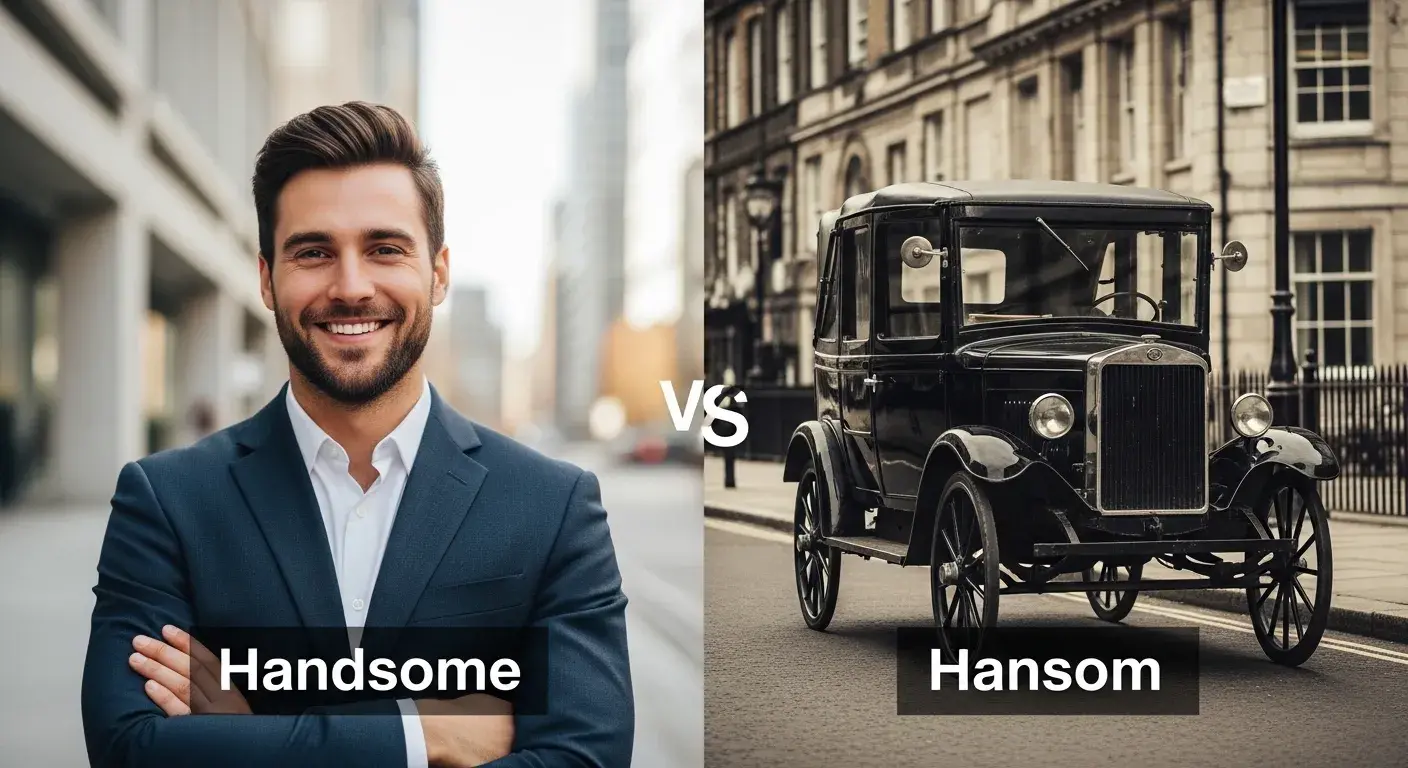
Handsome is the correct word for people or things that look attractive. Hansom is a different word and refers to a type of old-fashioned horse-drawn cab.
This quick answer solves the main confusion, but many writers still mix these two words up.
People search for handsome or hansom because the words look almost the same and sound very similar when spoken.
In fast typing, autocorrect mistakes, or casual writing, it is easy to drop the “e” and end up with the wrong word. This mistake often appears in emails, social media posts, and even blogs.
Another reason for confusion is that both words are real English words. One is common and used daily. The other is rare and historical. Because both exist, spellcheck does not always flag the error.
Using the wrong word can completely change meaning. Calling a person “hansom” is incorrect and confusing. At the same time, using “handsome” when talking about an old carriage is also wrong.
This article clears the confusion clearly and simply. You will learn the difference between handsome or hansom, where each word comes from, how British and American English treat them, common mistakes to avoid, and how to use the correct word with confidence.
Handsome or Hansom – Quick Answer
Handsome means attractive, good-looking, or impressive.
Hansom refers to a type of two-wheeled horse-drawn cab from the 19th century.
Examples:
- He is a handsome man.
- The building has a handsome design.
- The hansom cab was popular in old London.
Simple rule:
People and things = handsome
Old carriage = hansom
The Origin of Handsome or Hansom
Understanding the history makes the difference clearer.
Origin of Handsome
The word handsome comes from Old English. It originally meant easy to handle or pleasing in form. Over time, its meaning changed and expanded.
Today, handsome means:
- Good-looking (especially for men)
- Well-designed or impressive
- Generous or large in amount (a handsome reward)
It has been used for hundreds of years and is very common in modern English.
Origin of Hansom
The word hansom comes from the Hansom cab, named after Joseph Hansom, who designed it in 1834. It was a fast, two-wheeled horse-drawn taxi used mainly in Britain.
Hansom is not an adjective for looks. It is a noun connected to transport history.
This is why the words should never replace each other.
British English vs American English Usage
Both British and American English agree on the meanings.
| Word | British English | American English | Meaning |
| Handsome | Yes | Yes | Attractive, impressive |
| Hansom | Rare | Very rare | Old horse-drawn cab |
Key point:
There is no spelling difference here between UK and US English. The difference is meaning, not region.
Which Spelling Should You Use?
Choose based on meaning, not sound.
- Talking about a person’s looks? → Handsome
- Talking about design or appearance? → Handsome
- Talking about an old carriage or history? → Hansom
For most writers:
You will almost always need handsome.
If you are not writing about 19th-century transport, you probably do not need hansom at all.
Common Mistakes with Handsome or Hansom
Here are the most common errors and fixes:
❌ He is a very hansom man.
✅ He is a very handsome man.
❌ She married a hansom actor.
✅ She married a handsome actor.
❌ The house looks hansom.
✅ The house looks handsome.
❌ A handsome cab waited outside.
✅ A hansom cab waited outside.
Why mistakes happen:
- Typing fast
- Autocorrect errors
- Relying on sound instead of meaning
Handsome or Hansom in Everyday Examples
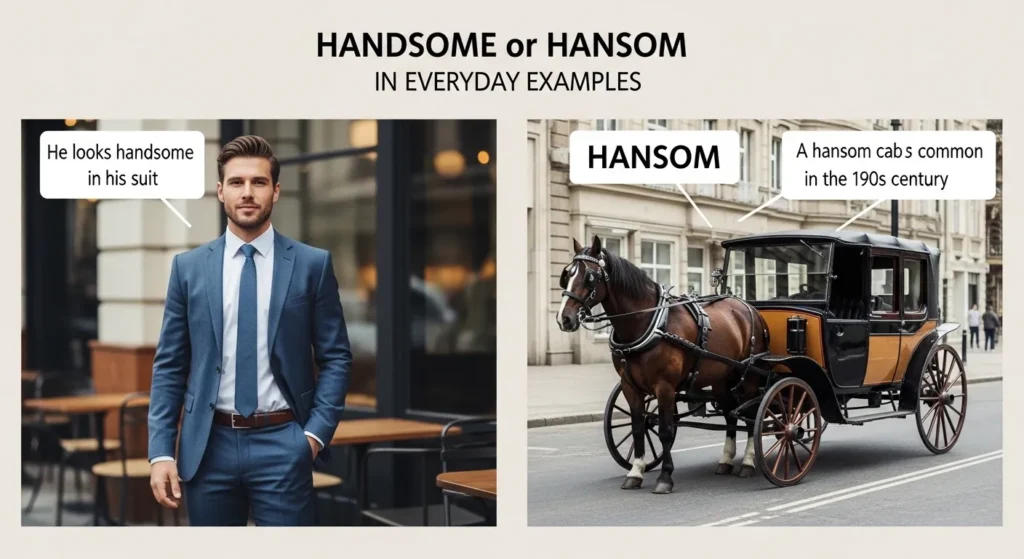
Emails
- He made a handsome presentation at the meeting.
News
- The actor received praise for his handsome appearance.
Social Media
- Such a handsome smile
Formal Writing
- The project received a handsome investment from donors.
Historical Writing
- A hansom cab waited outside the theater in Victorian London.
Handsome or Hansom – Google Trends & Usage Data
Search data shows that handsome is searched millions of times more than hansom.
- Handsome appears in:
- Fashion articles
- Movie reviews
- Descriptions of people and buildings
- Hansom appears in:
- History books
- Museums
- Victorian-era literature
Most people searching for handsome or hansom are checking spelling, not meaning. This confirms that confusion is spelling-based, not grammatical.
Comparison Table: Handsome vs Hansom
| Word | Correct | Meaning | Part of Speech | Common Today |
| Handsome | ✅ Yes | Attractive, impressive | Adjective | Very common |
| Hansom | ✅ Yes | Horse-drawn cab | Noun | Rare |
FAQs
1. Is hansom just a misspelling of handsome?
No. Hansom is a real word but has a completely different meaning.
2. Can I use hansom to describe a person?
No. That is incorrect.
3. Is handsome only used for men?
Mostly, but it can describe women, buildings, or ideas too.
4. Is hansom used in modern English?
Rarely. Mostly in historical contexts.
5. Does British English prefer hansom?
No. Both British and American English use handsome for looks.
6. Can handsome describe things?
Yes. Example: a handsome profit or a handsome house.
7. Which word should I use in professional writing?
Handsome.
Conclusion
The confusion between handsome or hansom is simple but common. Both words exist, but they are not interchangeable. Handsome is the correct word for describing attractive people, impressive designs, or generous amounts. Hansom is a historical term used only for a specific type of horse-drawn cab.
There is no regional spelling issue here. British and American English agree fully. The problem is relying on sound instead of meaning.
If you remember one thing, remember this:
Looks = handsome
Old carriage = hansom
For everyday writing, emails, blogs, and professional content, you almost always need handsome. Using the correct word improves clarity, confidence, and credibility in your writing.
Learn more:
Roomer or Boarder: What’s the Difference?(2026)

I am Samuel Reedman, a digital English content creator who writes educational comparison posts for learners worldwide. My work emphasizes correct word usage, pronunciation differences, and practical examples for daily communication.