The simple choice between hi or hello may seem small, but it matters more than many people realize. This is why so many users search for this keyword. A greeting is the first thing a reader notices, and first impressions matter. The wrong greeting can make a message sound too casual, too cold, or even unprofessional. In emails, chats, job applications, and meetings, people often stop and wonder: should I say hi or hello?
The confusion comes from context. Both hi and hello are common English greetings. Each are polite. Both start conversations. Yet they do not feel the same. One sounds relaxed and friendly. The other sounds polite and neutral. In work emails, saying hi may feel too informal. In text messages or chats, saying hello may feel stiff or distant. Culture, age, relationship, and setting all influence the choice.
This confusion increases for English learners and professionals working in global environments. What sounds friendly in one culture may sound unprofessional in another. Because greetings are short, people worry about getting them wrong.
This article clears up that confusion clearly and simply. You will get a quick answer first, followed by practical rules, real-life examples, and common mistakes to avoid. By the end, you will know exactly when to use hi and when hello fits better, in any situation.
Hi or Hello – Quick Answer
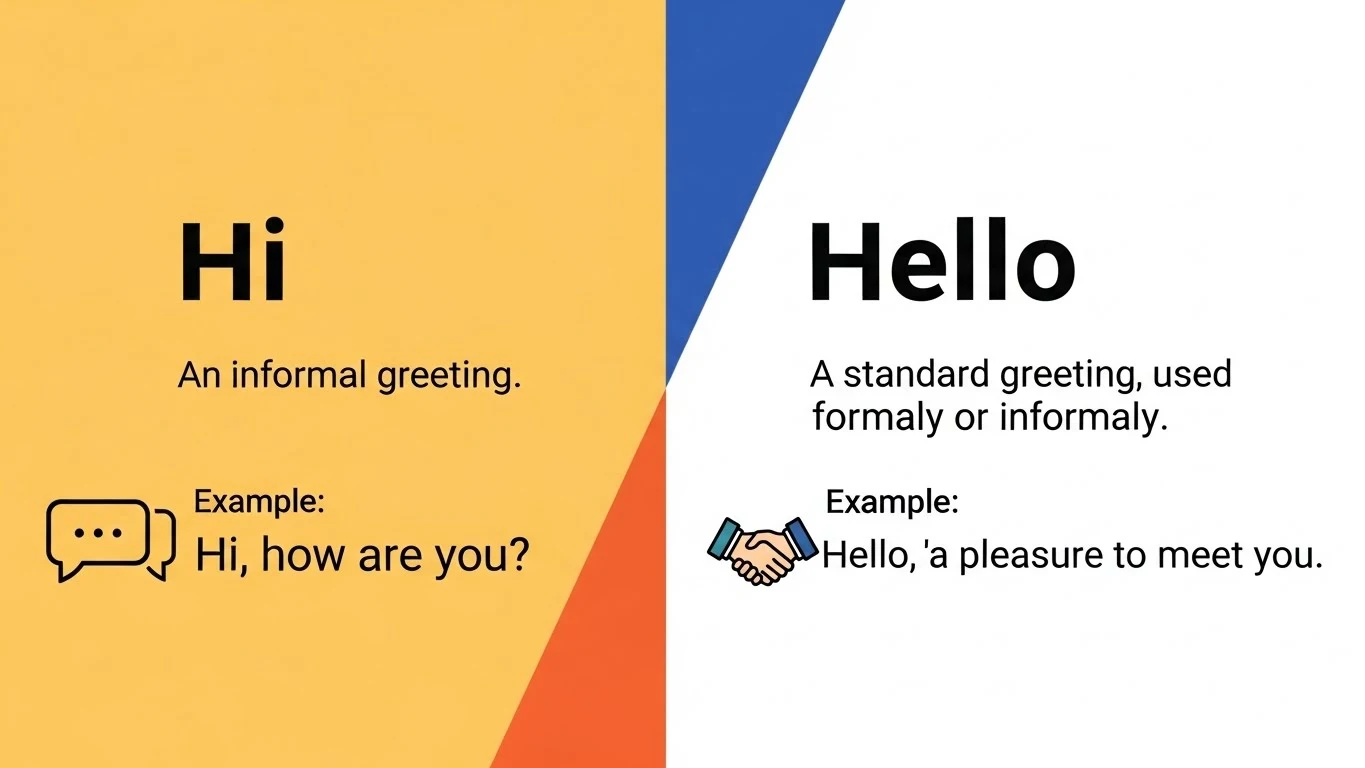
Hi = casual, friendly, informal
Hello = polite, neutral, more formal
Examples:
- Hi Sam, how are you?
- Hello Mr. Brown, thank you for your email.
Simple rule to remember:
👉 Use hi for informal communication.
👉 Use hello for formal or first contact.
If you follow this rule, you will sound natural in most situations.
Learn more about: Unengaged or Disengaged: Which Word Should You Use?
What Does “Hi” Mean and When Should You Use It?
Hi is a short, friendly greeting. It feels warm, relaxed, and conversational. People often use it when they already know the person or when the situation is informal.
Best situations to use hi:
- Text messages
- Team chats (Slack, WhatsApp, Teams)
- Emails to coworkers you know well
- Social media comments
- Casual conversations
Examples:
- Hi Alex, can you check this file?
- Hi everyone, hope you’re doing well.
- Hi! Just wanted to say thanks.
Using hi creates a friendly tone and helps conversations feel open and relaxed.
What Does “Hello” Mean and When Should You Use It?
Hello is a polite and neutral greeting. It sounds respectful and professional without being cold. It is safer in situations where you are unsure about tone or relationship.
Best situations to use hello:
- First-time emails
- Job applications
- Formal letters
- Client or customer communication
- Meetings and presentations
Examples:
- Hello Ms. Khan, I am writing regarding your inquiry.
- Hello and welcome to today’s meeting.
- Hello Professor, I have a question about the assignment.
Using hello shows respect and professionalism.
The Origin of Hi or Hello
The greeting hello appeared first. In the 1800s, it was used to call attention or express surprise. Its popularity grew with the invention of the telephone, where people needed a clear way to start a conversation.
Hi developed later as a shorter, more casual greeting. Over time, it became common in friendly speech and everyday conversation.
There are no spelling differences or grammar issues with either word. The difference is entirely about tone and formality, not correctness.
British English vs American English Usage
Both hi and hello are spelled the same in all English-speaking countries. The difference lies only in frequency and tone.
| Greeting | British English | American English |
| hi | casual, common | very common |
| hello | polite, formal | polite, formal |
British speakers use hi very often in daily life, just like Americans. The rules of formality remain the same everywhere.
Which Greeting Should You Use?
Here is clear guidance based on audience and setting:
- US audience:
- Casual → hi
- Formal → hello
- UK/Commonwealth audience:
- Same rule applies
- Global or professional writing:
- Use hello for first contact
Safe choice:
👉 If you are unsure, choose hello.
It never sounds rude or unprofessional.
Common Mistakes with Hi or Hello
Many people make small greeting mistakes that affect tone.
❌ Using hi in very formal letters
✅ Use hello
❌ Using hello in fast team chats
✅ Use hi
❌ Mixing tone in one message
✅ Stay consistent
❌ Writing “Hi Sir”
✅ Write “Hello Sir”
Greetings should match the level of formality in the rest of your message.
Hi or Hello in Everyday Examples
- Hello John, I am writing to follow up on our meeting.
Work Chat
- Hi, are you free for a quick call?
News Quote
- She waved and said hello to the crowd.
Social Media
- Hi everyone! Thanks for the support.
Formal Event
- Hello and welcome to the annual conference.
These examples show how context guides the choice.
Hi or Hello – Usage Trends
Search data shows hi is more commonly used worldwide, especially in:
- Text messages
- Social media
- Workplace chat tools
Hello appears more in:
- Email writing guides
- Job search advice
- Professional communication tips
Interest in both words increases during:
- Job application seasons
- Exam periods
- Professional skill training
This confirms that people care deeply about greetings and tone.
Hi vs Hello: Comparison Table
| Word | Tone | Best Use |
| hi | casual, friendly | chats, coworkers, friends |
| hello | polite, formal | emails, meetings, first contact |
This table summarizes the key difference clearly.
FAQs About Hi or Hello
1. Is hi rude in emails?
No, but it can sound casual.
2. Is hello always formal?
It is more polite than hi.
3. Can I use hi at work?
Yes, with colleagues you know.
4. Which is better for first contact?
Hello.
5. Is hi okay in job emails?
Better to use hello.
6. Do British people say hi?
Yes, very often.
7. Can I use both in one message?
No, choose one for consistency.
Conclusion
Choosing between hi or hello is about tone, not correctness. Both greetings are correct and polite. The difference lies in formality and context. Hi feels friendly, short, and relaxed. It works best with friends, coworkers, and informal messages. Hello feels respectful, professional, and safe. It fits emails, meetings, and first conversations.
If you want to sound professional or are writing to someone new, choose hello. If you want to sound warm and approachable, choose hi. When in doubt, always lean toward hello—it never hurts your tone.
Understanding this small choice improves communication. It helps you sound confident, clear, and appropriate in any situation. Once you know the rule, you will never hesitate again.

I am Olga Tokarczuk, a Polish novelist and essayist whose work is widely studied for its rich vocabulary, precise language, and literary expression. My writings are often referenced in academic and linguistic contexts for their clarity of diction and thoughtful use of words. I am a prominent figure in modern world literature.