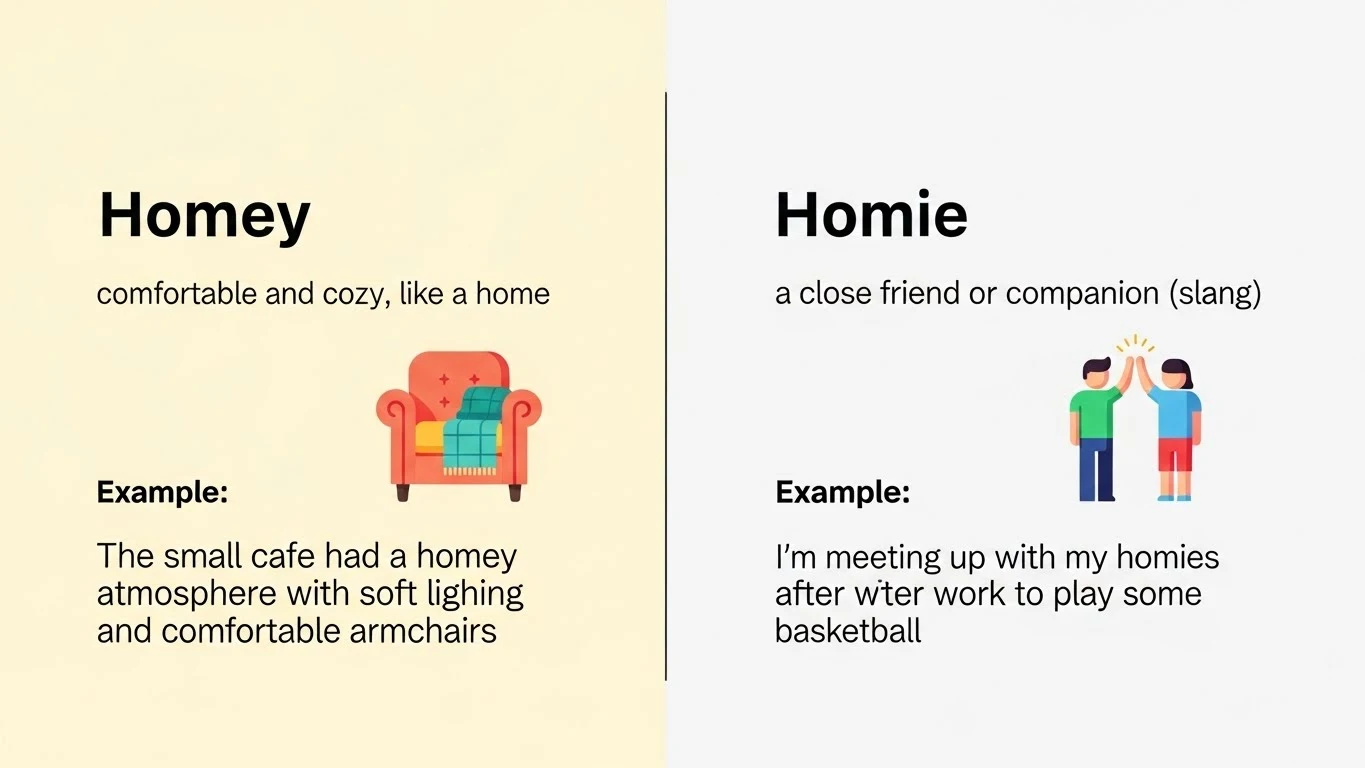
Homey means warm, cozy, and comfortable.
Homie means a close friend.
Have you ever read a line like “This place feels so homie” and felt something was off? Or heard someone say, “That café is really homey,” and wondered if homie would also work?
You are not alone. Many people search for homey or homie because the words look similar and sound almost the same in casual speech.
The confusion happens because both words come from the idea of home, but they are used in very different ways.
Homey describes a feeling, place, or atmosphere that feels safe and welcoming. Homie refers to a person, usually a close friend. When these words are mixed, the meaning can change or the sentence can sound strange.
This mistake is common in social media posts, messages, and informal writing. Spoken English and autocorrect make the difference harder to notice. This article clears up the confusion fast.
Homey or Homie – Quick Answer
Is it homie or homey
It depends on what you mean. Homey describes a place or feeling that is warm and comfortable, while homie refers to a close friend.
Homey vs hohomie or homeymie?
Homey describes a place or feeling that is warm and cozy, while homie refers to a close friend.
Rule of thumb: Places are homey, people are homies.
Homey atau homie?
Tergantung maknanya. Homey digunakan untuk menggambarkan tempat atau suasana yang nyaman, sedangkan homie berarti teman dekat.
Simple rule:
👉 Places are homey. People are homies.
What Does Homey Mean?
Homey or homy
Homey is the correct and widely accepted spelling. Homy is a rare variant and is not commonly used in modern English.
Homey (sometimes spelled homy) is an adjective. It describes something that feels warm, cozy, friendly, or comfortable—just like being at home.
It is commonly used for:
- Rooms and houses
- Cafés and restaurants
- Offices and hotels
- Atmosphere or mood
Examples:
- The small café has a homey atmosphere.
- She decorated her apartment to make it feel homey.
- The hotel lobby felt warm and homey.
In writing, homey has a positive tone. It suggests comfort, safety, and relaxation.
What Does Homie Mean?
Homie is a noun and informal slang term. It means a close friend, buddy, or someone you trust. It originally comes from American street slang and is very common in music, movies, and social media.
It is usually used:
- In casual conversation
- Between friends
- In pop culture and online posts
Examples:
- He’s my homie—we grew up together.
- Hanging out with my homies tonight.
- She introduced me to her homies from college.
How do you spell homie?
The correct spelling is homie — H‑O‑M‑I‑E. It is informal slang used for a close friend.
Because homie is slang, it should be avoided in formal or professional writing.
The Origin of Homey or Homie
Origin of Homey:
The word homey comes directly from home. It has been used for over a century in English to describe comfort, warmth, and a pleasant domestic feeling.
Origin of Homie:
The word homie comes from American slang. It developed from homeboy, which originally meant a friend from the same neighborhood or hometown. Over time, it was shortened to homie and became widely used in casual speech.
British English vs American English Usage
| Word | British English | American English | Meaning |
| homey | Yes | Yes | Cozy, comfortable |
| homie | Rare | Very common | Friend (slang) |
Homey is safe and acceptable in both British and American English.
Homie is strongly associated with American slang and is less common in British English.
If you are writing for a global audience, homey is the safer choice.
Which One Should You Use?
Choose based on meaning, tone, and audience.
- Talking about a place or feeling? → Use homey
- Talking about a friend? → Use homie
- Professional or academic writing? → Use homey, avoid homie
- Casual chat or social media? → Homie is fine
Always ask yourself:
Am I describing a place or a person?
Common Mistakes with Homey or Homie
- ❌ This café feels homie.
✅ This café feels homey. - ❌ He is my homey from school.
✅ He is my homie from school. - ❌ Using slang in formal writing
✅ Avoid homie in professional texts
Mixing these words can confuse readers and make your writing sound unnatural.
Homey or Homie in Everyday Examples
Emails:
- The office has a homey and relaxed feel.
News Articles:
- The shelter provides a safe, homey environment for families.
Social Media:
- Out with my homies tonight
Formal Writing:
- The interior design creates a homey atmosphere for guests.
Homey or Homie – Google Trends & Usage Data
Search trends show that homey or homie is frequently searched by English learners and casual writers.
Most users are unsure about meaning and correct usage, not spelling.
- Homey appears more in:
- Home décor blogs
- Hotel and café reviews
- Lifestyle and design articles
- Homie appears more in:
- Social media
- Music and entertainment
- Informal conversations
This confirms the confusion is about function, not grammar.
Comparison Table: Homey vs Homie
| Word | Correct? | Meaning | Formal Use |
| homey | ✅ Yes | Cozy, warm | Yes |
| homie | ✅ Yes | Friend (slang) | No |
FAQs
- Are homey and homie the same?
No. They have different meanings.
- Is homie slang?
Yes, it is very informal.
- Can homey describe a person?
Rarely. It usually describes places or feelings.
- Is homie okay in work emails?
No. Avoid it in professional writing.
- Do British people use homie?
Rarely. It is mostly American slang.
- Is “homey” ever spelled “homely”?
Yes, but homely can sometimes mean plain or unattractive in British English.
- Which word is safer in writing?
Homey.
- How do you spell homie?
The correct spelling is homie — H‑O‑M‑I‑E. It is informal slang used for a close friend.
- Is “homey” slang?
No. Homey is not slang. It is a regular adjective used to describe a place or feeling that is warm and comfortable.
- Homey or homy?
Homey is the correct and widely accepted spelling. Homy is rare and is not commonly used in modern English.
- Homy or homey?
Homey is the correct spelling used in modern English. Homy is rare and generally avoided.
- Homey vs homie?
Homey describes a place or feeling that is warm and cozy, while homie refers to a close friend.
Rule: Places are homey, people are homies.
Conclusion
The confusion between homey or homie is easy to understand because both words come from the idea of home.
- Homey describes comfort, warmth, and atmosphere.
- Homie refers to a close friend and is informal slang.
There is no spelling issue here—only word choice. If you are writing professionally, academically, or for a global audience, homey is the safer and more appropriate option. Homie works best in relaxed conversations, text messages, and social media.
Remember this simple tip:
Spaces are homey. People are homies.
Keep that rule in mind, and you will always choose the right word and sound clear, natural, and confident.
Learn about:
Verses or Versus: What’s the Difference ?(2026)

I am Olga Tokarczuk, a Polish novelist and essayist whose work is widely studied for its rich vocabulary, precise language, and literary expression. My writings are often referenced in academic and linguistic contexts for their clarity of diction and thoughtful use of words. I am a prominent figure in modern world literature.