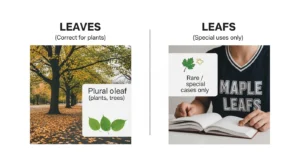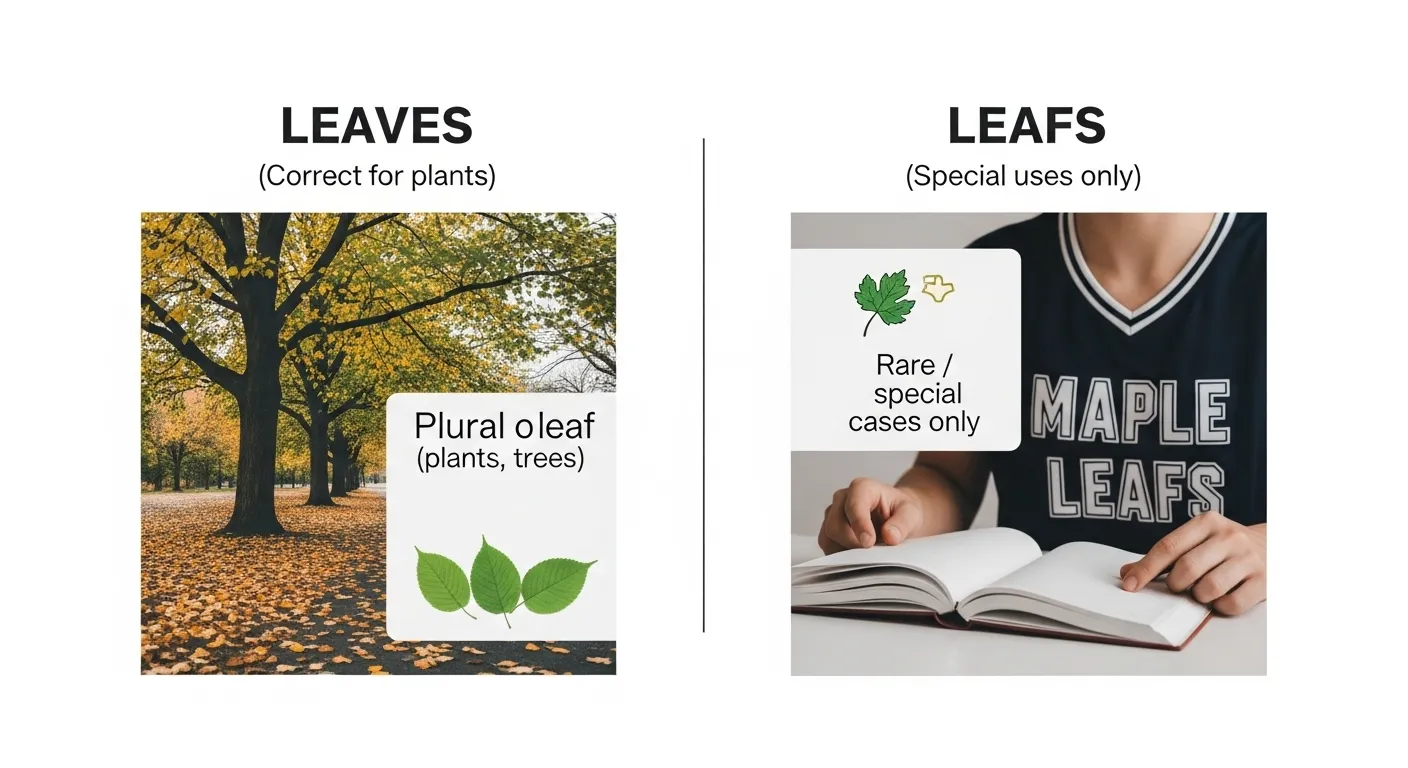
“Leaves” is the correct plural of leaf in almost all cases. “Leafs” is rare and used only in special meanings like turning book pages or in names.
Many people search for leafs or leaves because both forms appear online and sound correct. Students see “leafs” in phrases like “leafs through a book” or in names and think it can be used for plants too. This leads to mistakes in school work, exams, emails, and blog posts.
English plurals can be confusing. Some words change spelling in the plural form. The word leaf changes to leaves, which is easy to forget.
Spellcheck tools do not always explain why one form is right and the other is not. Because of this, learners and even native writers feel unsure. This article clears the confusion in clear, simple words.
You will get fast answers, real examples, common mistakes, usage tips, and advice for different audiences. By the end, you will always know when to use leaves and when leafs is (rarely) correct.
Leafs or Leaves – Quick Answer
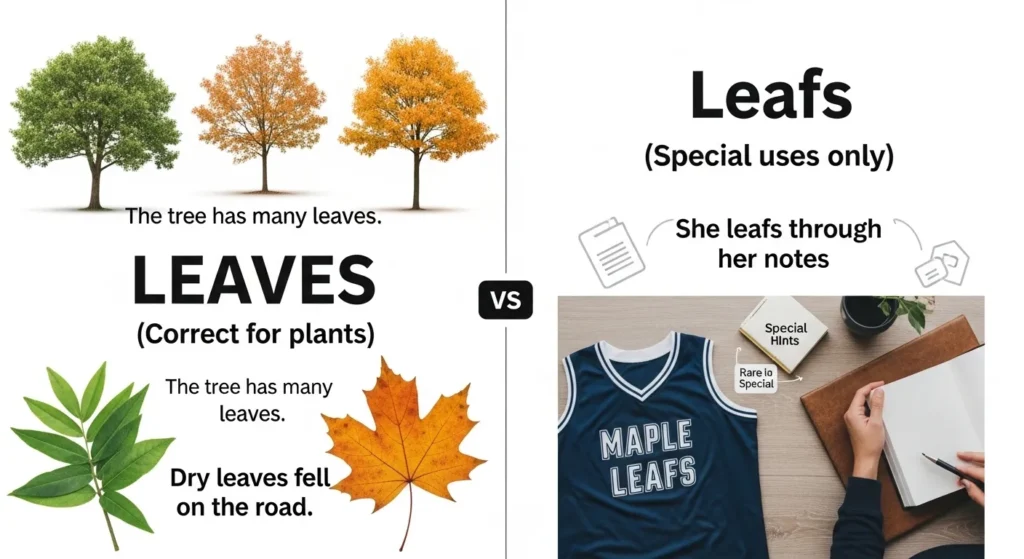
Use “leaves” for the plural of leaf when you talk about plants, trees, or nature. “Leafs” is rare and not correct for plants.
Correct examples:
- The tree has many leaves.
- Dry leaves fell on the road.
Rare but correct (special use):
- He leafs through the book.
- The Maple Leafs won the match.
Wrong for plants:
- The plant has many leafs.
The Origin of Leafs or Leaves
The word leaf comes from Old English lēaf. Over time, English changed the sound of f to v in some plural words. This is why we say:
- leaf → leaves
- knife → knives
- wolf → wolves
- shelf → shelves
This pattern became standard in English. The plural leaves is now the normal form for plants. The form leafs stayed only in special uses, such as when someone flips pages in a book or in proper names. That is why leafs exists but should not be used for plant leaves.
British English vs American English Spelling
There is no spelling difference between British and American English for this pair.
| Form | British English | American English | Usage |
|---|---|---|---|
| leaf | Yes | Yes | Singular |
| leaves | Yes | Yes | Correct plural for plants |
| leafs | Rare | Rare | Special cases only |
Both varieties agree that leaves is the correct plural for plants.
Which Spelling Should You Use?
Use leaves in almost all writing.
Use leaves when you mean:
- Tree leaves
- Plant leaves
- Leaves on the ground
- Leaves in autumn
Use leafs only when:
- You mean turning pages (“She leafs through notes.”)
- It is part of a name
Simple rule: Plants = leaves (always).
Common Mistakes with Leafs or Leaves
Mistake 1: Using “leafs” for plants
- ❌ The tree has many leafs.
- ✅ The tree has many leaves.
Mistake 2: Mixing singular and plural
- ❌ One leaves fell.
- ✅ One leaf fell.
Mistake 3: Thinking names change the rule
- Names that use “Leafs” do not change grammar rules for plants.
Leafs or Leaves in Everyday Examples
Emails:
- Please clear the leaves from the path.
News:
- Wind scattered dry leaves across the road.
Social Media:
- Love walking on crunchy leaves.
Formal Writing:
- The study tested water loss from plant leaves.
School Writing:
- Insects eat green leaves.
Special use:
- She leafs through her notes.
Leafs or Leaves – Google Trends & Usage Data
Search data shows that leaves is far more common than leafs in writing, news, and education. People search leafs or leaves because plural rules with f → ves are confusing. This confusion appears in many countries where English is learned as a second language. Teachers and grammar guides always recommend leaves for plants.
Comparison Table: Leafs vs Leaves
| Feature | Leafs | Leaves |
|---|---|---|
| Correct for plants | ❌ No | ✅ Yes |
| Common in writing | ❌ Rare | ✅ Very common |
| Used for pages (verb) | ✅ Yes | ❌ No |
| Safe for exams | ❌ No | ✅ Yes |
FAQs
Is “leaves” the correct plural of leaf?
- Yes. Leaves is the correct plural for plants.
Is “leafs” ever correct?
- Yes, but only for turning pages or in names.
Can I write “leafs” in exams?
- No. Use leaves for plants.
Do British and American English differ here?
- No. Both use leaves.
Why does leaf become leaves?
- English changes f to v in some plurals.
What is the easiest rule to remember?
- Plants = leaves.
Is “leafs” wrong for trees?
- Yes. Always write leaves for trees.
Conclusion
The choice between leafs or leaves is simple once you know the rule. In modern English, leaves is the correct plural for leaf when you talk about plants, trees, and nature. This form is used in schools, books, news, and professional writing. The word leafs still exists, but only in special cases, such as turning pages or in names. It should not be used for plant leaves.
If you want clear and correct English, always choose leaves for plants. This one small choice improves your writing and avoids common mistakes. Remember the simple rule: If it grows on a tree, write “leaves.” Follow this, and you will always be correct.
Learn more article:
Tats or Tatts: Which Spelling Is Correct ?(2026)
Start or Sit: What’s the Difference ?(2026)

I am Olga Tokarczuk, a Polish novelist and essayist whose work is widely studied for its rich vocabulary, precise language, and literary expression. My writings are often referenced in academic and linguistic contexts for their clarity of diction and thoughtful use of words. I am a prominent figure in modern world literature.