Few legal terms confuse people more than lessor or lessee. These words appear in rental agreements, lease contracts, emails, and court papers. Yet many people pause every time they see them. Even landlords and tenants mix them up.
The reason is simple. The words look alike. They sound alike. And they often appear together in the same sentence. One letter changes everything, but that small change flips the meaning. This causes real problems. Using the wrong word can confuse readers or even change the meaning of a contract.
People search for lessor or lessee because they want a fast, clear answer. They want to know who owns the property and who rents it. They also want to sound professional in writing.
This guide solves that confusion. You will get a quick answer first. Then you will learn where the words came from, how British and American English use them, and which one you should choose. You will also see real-life examples and common mistakes. Simple rules. Clear meaning. No guesswork.
Another topic: Tacet or Tacit: What’s the Difference and Which One You Use?
Lessor or Lessee – Quick Answer
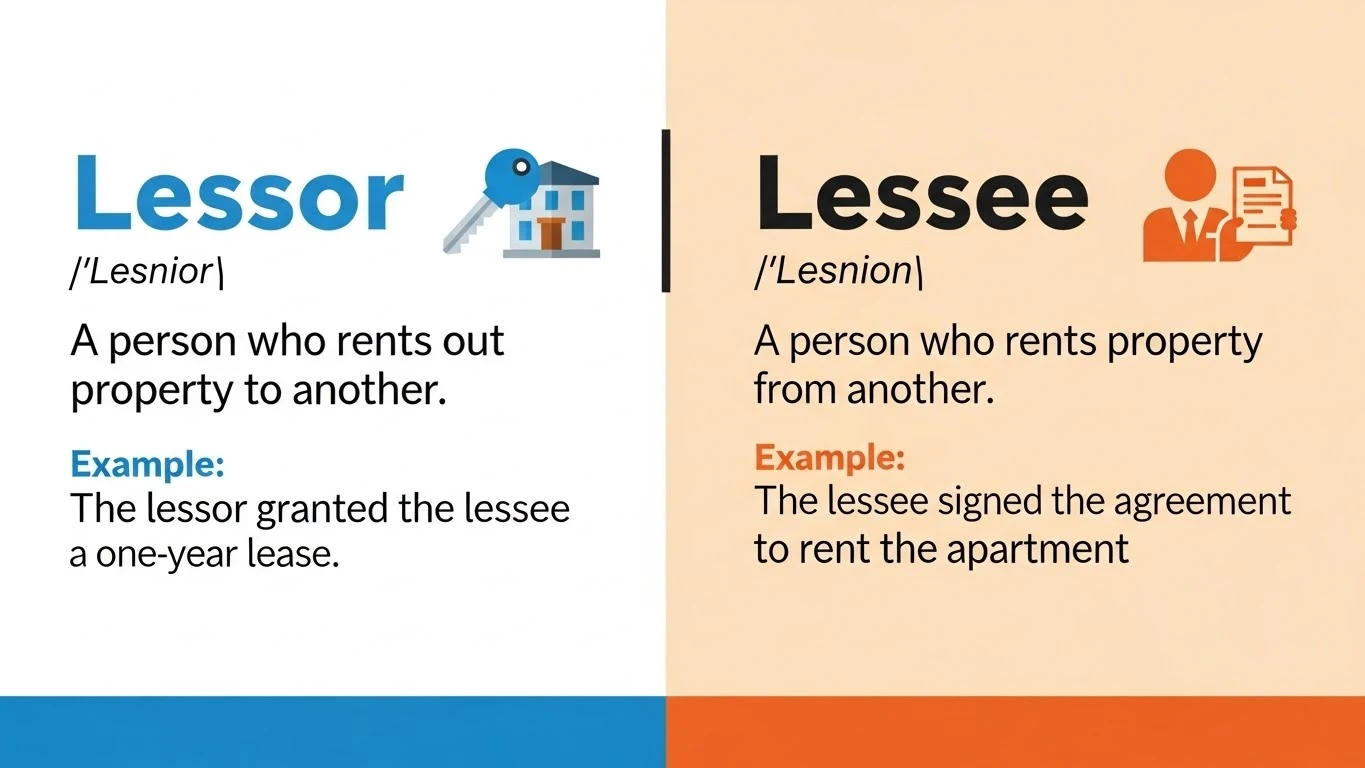
- Lessor = the owner who rents out the property
Example: The landlord is the lessor. - Lessee = the person who rents the property
Example: The tenant is the lessee.
Tip:
- Lessor = gives the lease
- Lessee = receives the lease
The Origin of Lessor or Lessee
Both words come from Old French and Latin legal language.
- Lessor comes from lesser, meaning “to let.”
- Lessee comes from lessé, meaning “one who holds property by lease.”
The spelling difference exists to show opposite roles. One grants the lease. The other accepts it. Over time, English kept both forms for legal clarity. That clarity matters most in contracts, law, and business writing.
British English vs American English Spelling
There is no spelling difference between British and American English for these words. Both regions use the same forms and meanings.
| Term | British English | American English |
| lessor | same meaning | same meaning |
| lessee | same meaning | same meaning |
The confusion is not regional. It is role-based.
Which Spelling Should You Use?
Use the term based on role, not location.
- US audience: Follow legal definitions strictly.
- UK/Commonwealth: Same legal usage applies.
- Global or business writing: Use the correct role and define it once if needed.
If clarity matters, add a short note like:
“The lessor (property owner)…”
Common Mistakes with Lessor or Lessee
- ❌ Calling the tenant the lessor
✅ Tenant = lessee - ❌ Using both words without definition
✅ Define roles early - ❌ Switching terms mid-document
✅ Stay consistent - ❌ Assuming lessor means “less money”
✅ Meaning is about leasing, not price
Lessor or Lessee in Everyday Examples
- Email: The lessee must sign the agreement by Friday.
- News: The lessor increased rent after renewal.
- Social media: Always read your lease if you’re a lessee.
- Formal writing: The lessor retains ownership of the asset.
Lessor or Lessee – Google Trends & Usage Data
Search data shows steady interest worldwide. Lessee is searched more by renters and students. Lessor is searched more by landlords, lawyers, and business owners. Interest is highest in the US, UK, Canada, and Australia, where leasing is common. Searches peak during moving seasons and business contract renewals.
Lessor vs Lessee: Side-by-Side Comparison
| Term | Role | Simple Meaning |
| lessor | owner | rents out property |
| lessee | renter | rents the property |
FAQs About Lessor or Lessee
1. Is the landlord the lessor?
Yes. The landlord is the lessor.
2. Is the tenant the lessee?
Yes. The tenant is the lessee.
3. Can one person be both?
Not in the same lease.
4. Are these words only for property?
No. They apply to cars, equipment, and assets.
5. Which word appears more in contracts?
Both appear equally, often together.
6. Can I replace them with landlord and tenant?
Yes, in informal writing.
7. Are they outdated terms?
No. They are still standard in law.
Conclusion
The difference between lessor or lessee is small but important. One owns the property. The other rents it. Mixing them up can confuse readers and weaken contracts. The good news is that the rule is simple. If you give the lease, you are the lessor. If you receive the lease, you are the lessee.
These terms do not change between British and American English. They stay the same worldwide. That makes role clarity more important than spelling rules. In legal and business writing, always use the correct term and stay consistent. In casual writing, simpler words like landlord and tenant may work better.
Understanding this difference saves time, avoids errors, and builds trust. Once you learn the roles, you will never confuse them again.

I am Robert Tressell, the pen name of Robert Noonan, a British–Irish novelist and political writer. I am best known for my novel The Ragged-Trousered Philanthropists, which presents a strong depiction of working-class life and social inequality. My work remains influential in English literature and social thought.