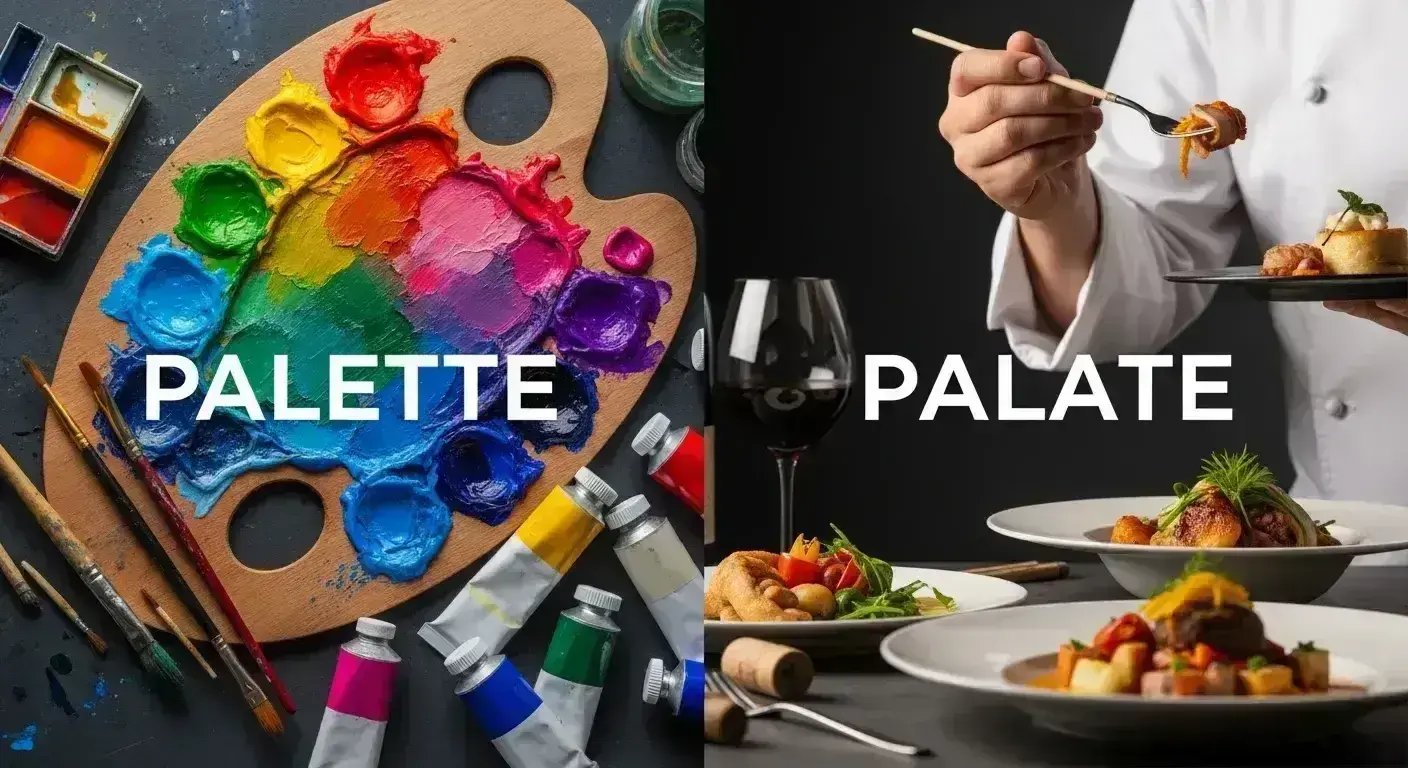
Palette relates to colors and art, while palate relates to taste and the mouth.
Many people search for “palette or palate” because these two words look almost identical but have very different meanings.
When writing about art, food, design, or even personal preferences, choosing the wrong word can quickly confuse readers. A single misplaced letter can completely change what you mean.
The confusion happens because both words are pronounced very similarly in spoken English. Autocorrect does not always catch the mistake, and casual writing makes the problem worse.
For example, writing “a refined color palate” instead of “palette” changes the sentence from art-related to something about taste.
This article solves that confusion clearly and simply. You will get a quick answer first, then a full explanation of each word, where they come from, how British and American English use them, and which spelling fits your audience.
By the end, you will know exactly when to use palette and when to use palate, with no guessing and no second thoughts.
Palette or Palate – Quick Answer
Palette refers to colors, art, or design.
Palate refers to taste or the roof of the mouth.
Examples:
- The artist chose a soft color palette.
- The dish appealed to his refined palate.
Simple rule:
Colors = palette
Taste or mouth = palate
The Origin of Palette or Palate
Understanding the origin helps keep the meanings clear.
Origin of Palette
The word palette comes from the French word palette, meaning a small board. Artists used a flat board to mix paints, and the word later came to mean a range of colors. Over time, its meaning expanded to include color schemes in design, fashion, and branding.
Origin of Palate
The word palate comes from the Latin palatum, meaning the roof of the mouth. Because taste is closely linked to the mouth, the word also came to mean a person’s sense of taste or preference in food and drink.
Although the words look similar today, they developed from completely different roots.
British English vs American English Spelling
There is no spelling difference between British and American English for these words.
| Word | American English | British English | Meaning |
| Palette | Same spelling | Same spelling | Colors, art |
| Palate | Same spelling | Same spelling | Taste, mouth |
The confusion is not regional. It is purely about meaning.
Which Spelling Should You Use?
Choose based on context, not region.
- Talking about colors, painting, or design → Palette
- Talking about food, taste, or eating → Palate
- Writing professionally → Accuracy matters more than style
- Writing casually → Still use the correct word
Quick check:
Ask yourself: Am I talking about colors or taste?
That one question solves most mistakes.
Common Mistakes with Palette or Palate
Here are frequent errors writers make:
❌ A warm color palate
✅ A warm color palette
❌ The chef developed a unique palette
✅ The chef developed a unique palate
❌ Mixing both words in the same context
✅ Keep meanings separate
❌ Relying on spellcheck alone
✅ Always check meaning
These mistakes can change meaning and reduce clarity.
Palette or Palate in Everyday Examples
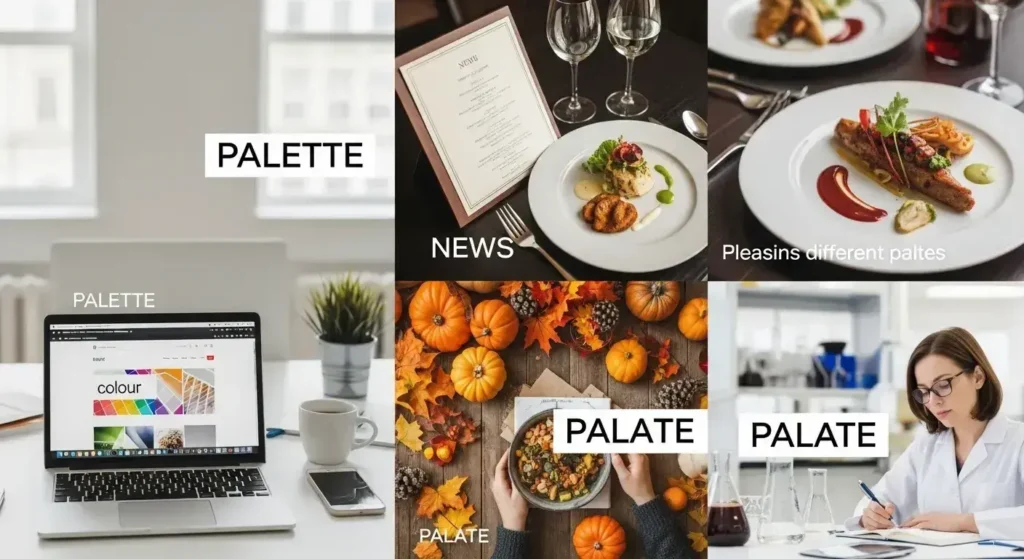
Emails:
We selected a new color palette for the website.
News:
The menu is designed to please a wide range of palates.
Social Media:
Love this fall color palette
Formal Writing:
The study examined how flavors affect the human palate.
Palette or Palate – Google Trends & Usage Data
Search data shows that palette is more commonly searched in design, branding, and marketing contexts. Palate appears frequently in food, cooking, and health related searches.
People often search “palette or palate” together because they are unsure which spelling fits their sentence. This confirms that user intent is about meaning, not pronunciation.
Design blogs, art tutorials, and branding guides favor palette. Food blogs, restaurant reviews, and culinary writing favor palate.
Comparison Table: Palette vs Palate
| Feature | Palette | Palate |
| Meaning | Colors, art | Taste, mouth |
| Related to | Design, painting | Food, eating |
| Pronunciation | Similar | Similar |
| Correct usage | Context-based | Context-based |
| Formal writing | Yes | Yes |
FAQs
1. Are palette and palate interchangeable?
No. They have different meanings.
2. Is palette only used in art?
Mostly, but it also applies to design and branding.
3. Does palate only mean taste?
It can also mean the roof of the mouth.
4. Is there a British vs American difference?
No. Both use the same spellings.
5. Why do people confuse these words?
They sound similar and look alike.
6. Can palate mean preference?
Yes, it can describe taste preferences.
7. Which word is more common online?
Palette appears more in design-related content.
Conclusion
The difference between palette vs palate is simple once you connect each word to its meaning. Palette belongs to the world of colors, art, and design. Palate belongs to taste, food, and the mouth. The confusion exists because the words look and sound alike, but their uses are clearly separate.
There is no regional spelling issue here. Both British and American English follow the same rules. What matters is choosing the right word for the right context. Using the wrong one can confuse readers or change your meaning completely.
If you remember one thing, remember this:
Artists use a palette. Food pleases a palate.
With that rule, your writing will stay clear, accurate, and professional every time.
Learn more:
Tats or Tatts: Which Spelling Is Correct ?(2026)

I am Olga Tokarczuk, a Polish novelist and essayist whose work is widely studied for its rich vocabulary, precise language, and literary expression. My writings are often referenced in academic and linguistic contexts for their clarity of diction and thoughtful use of words. I am a prominent figure in modern world literature.