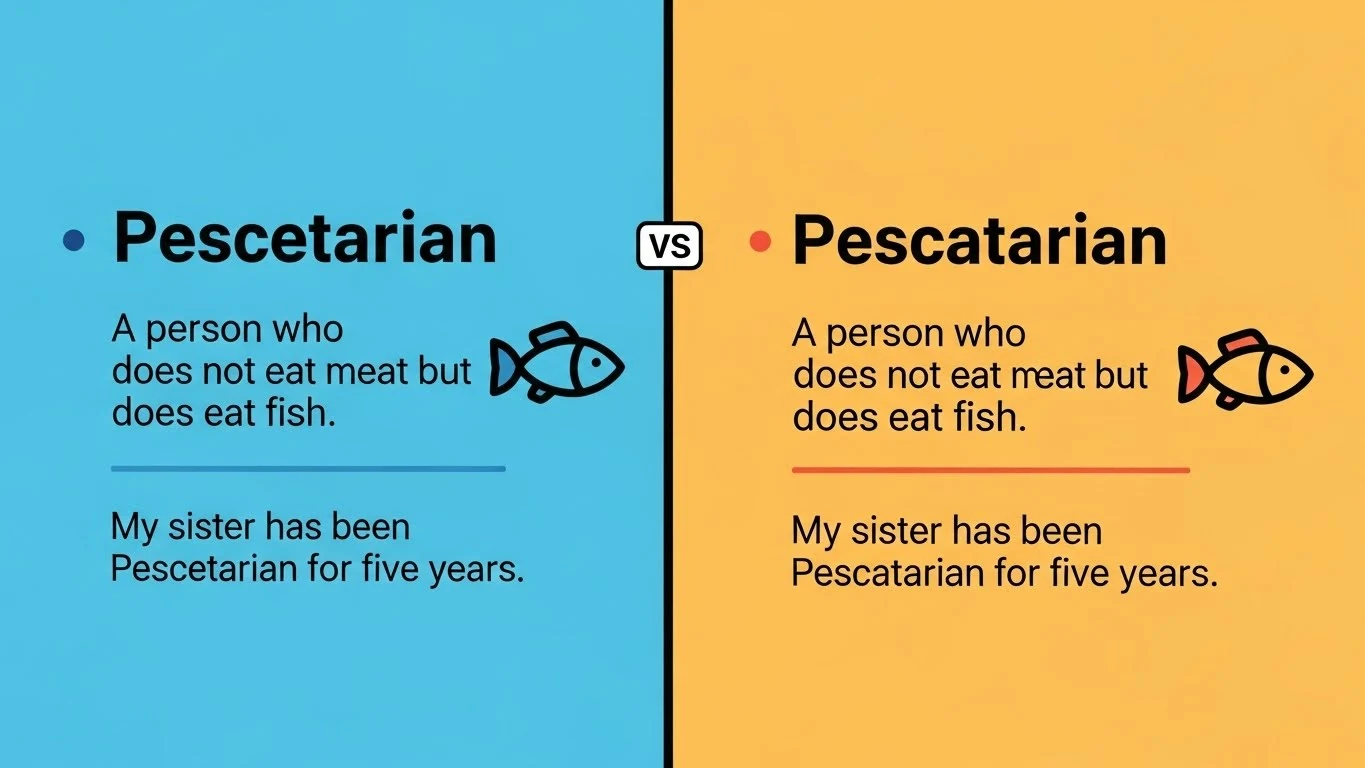
If you eat fish but avoid meat, you might describe yourself as a pescetarian. Or perhaps you spell it pescatarian. This spelling confusion is exactly why so many people search for “pescetarian or pescatarian.”
The two words look almost identical, sound the same when spoken, and appear interchangeably in blogs, menus, nutrition guides, and social media bios. Yet the small spelling difference creates genuine uncertainty.
People want to label their diets correctly. Whether you are explaining your food choices to friends, writing a health article, filling out a survey, or creating restaurant menu descriptions, using the right term matters.
Students, dietitians, fitness coaches, and everyday eaters often wonder if one spelling is American and the other British—or if one is simply incorrect.
Some assume pescetarian must be right because it resembles vegetarian. Others believe pescatarian looks unusual and therefore wrong. This confusion is common, understandable, and persistent.
This article clears things up clearly and quickly. You will learn what both words mean, where they come from, which spelling dictionaries and experts prefer, and how to use the term correctly in real-life situations. By the end, you will know exactly which spelling to choose—and why it matters for clarity, professionalism, and SEO.
Pescetarian or Pescatarian – Quick Answer
Both words refer to the same type of diet, but one spelling is preferred.
- Pescatarian ✅ = the standard and more accurate spelling
Example: She is a pescatarian who eats fish, vegetables, and grains. - Pescetarian ⚠️ = a common variant, but less accurate
Example: Some blogs use pescetarian, but major dictionaries favor pescatarian.
Most modern dictionaries, nutrition experts, and academic sources recommend pescatarian as the correct spelling.
What Does Pescatarian Mean?
A pescatarian is someone who follows a mostly vegetarian diet but includes fish and seafood. Meat from land animals—such as beef, chicken, pork, and lamb—is avoided.
A typical pescatarian diet may include:
- Fish and seafood
- Vegetables and fruits
- Grains and legumes
- Nuts and seeds
- Dairy and eggs (optional, depending on personal choice)
Pescatarianism is often chosen for health reasons, ethical concerns, environmental awareness, or religious and cultural preferences.
The Origin of Pescetarian or Pescatarian
Understanding the word’s origin explains why one spelling is preferred.
The term comes from Latin:
- Piscis = fish
- Vegetarian = a plant-based diet
When combined, piscis + vegetarian logically becomes pescatarian. This spelling preserves the original Latin root for fish.
The variant pescetarian likely emerged later because it visually resembles vegetarian, making it feel familiar and easier to spell. However, this version drifts slightly from the word’s original linguistic structure.
In short:
- Pescatarian = etymologically accurate
- Pescetarian = formed by habit and sound, not origin
British English vs American English Spelling
Many spelling debates exist because of regional differences, such as colour vs color or favourite vs favorite. However, this is not one of those cases.
There is no true regional difference between British and American English for this term.
| Spelling | British English | American English | Status |
| pescatarian | Yes | Yes | ✅ Preferred |
| pescetarian | Yes | Yes | ❌ Variant |
Both regions recognize both spellings, but pescatarian is favored worldwide in formal and professional contexts.
Which Spelling Should You Use?
In most situations, pescatarian is the safest and smartest choice.
- US audience: Pescatarian
- UK or Commonwealth audience: Pescatarian
- Academic or medical writing: Pescatarian
- Health blogs and SEO content: Pescatarian
- Casual conversation: Either, but pescatarian sounds more polished
If you want to appear clear, accurate, and credible, stick with pescatarian.
Common Mistakes with Pescetarian or Pescatarian
❌ Thinking pescetarian is the only correct spelling
✅ Understanding that pescatarian is preferred
❌ Mixing both spellings in one article
✅ Choose one spelling and remain consistent
❌ Assuming one spelling is British-only
✅ Both terms are global, but one is standard
❌ Believing the difference changes the meaning
✅ Both mean the same diet
Consistency and accuracy are key, especially in professional writing.
Pescetarian or Pescatarian in Everyday Examples
Emails:
I follow a pescatarian diet for health reasons.
News Articles:
More people are choosing a pescatarian lifestyle to reduce meat consumption.
Social Media:
Plant-based eating, plus fish 🐟 #pescatarian
Formal Writing:
The study examined long-term health outcomes among pescatarian participants.
These examples show how the word fits naturally into everyday and professional communication.
Pescetarian or Pescatarian – Google Trends & Usage Data
Search trends show that pescatarian is more widely used across the internet. It appears more often in:
- Health and nutrition journals
- Medical studies
- Educational websites
- Professional blogs
Pescetarian still receives search traffic, mostly from casual users, recipe blogs, and informal content. While both terms are understood, authoritative sources consistently favor pescatarian.
For SEO purposes, using pescatarian improves clarity and aligns with expert usage.
Comparison Table: Keyword Variations
| Term | Correct | Meaning | Usage Level |
| pescatarian | ✅ Yes | Fish + vegetarian diet | Standard |
| pescetarian | ⚠️ Variant | Same meaning | Informal |
FAQs
1. Do pescatarians eat meat?
No. They eat fish but avoid meat from land animals.
2. Is pescetarian wrong?
Not wrong, but less accurate than pescatarian.
3. Which spelling do doctors and nutritionists use?
Pescatarian.
4. Is a pescatarian considered vegetarian?
Partly, but fish is included.
5. Can pescatarians eat dairy and eggs?
Yes, if they choose to.
6. Is a pescatarian diet healthy?
Yes, when balanced and well-planned.
7. Which spelling should I use online?
Pescatarian—for SEO and clarity.
Describe more: Crowler or Growler: Meaning Usage and Differences?
Conclusion
The choice between pescetarian or pescatarian can feel confusing at first, especially since both words describe the same eating pattern. However, the difference matters more in writing than in speech. Pescatarian is the preferred and more accurate spelling. It reflects the Latin root for fish and appears more frequently in trusted, professional sources.
While pescetarian is still widely understood, it is best treated as a variant. If you want your writing to sound clear, credible, and consistent—especially in health content, academic work, menus, or SEO-focused articles—pescatarian is the better choice.
When clarity matters, standard spelling wins. Choose pescatarian, and you will always be on the safe side.

I am Olga Tokarczuk, a Polish novelist and essayist whose work is widely studied for its rich vocabulary, precise language, and literary expression. My writings are often referenced in academic and linguistic contexts for their clarity of diction and thoughtful use of words. I am a prominent figure in modern world literature.