Have you ever paused while writing and wondered: Should I use “rather” or “whether”? You are not alone. These two words look different, but many learners still confuse them because both appear in similar types of sentences.
Short answer:
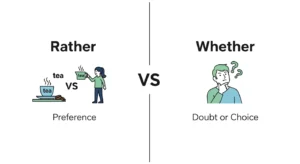
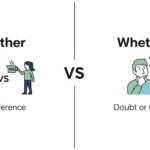
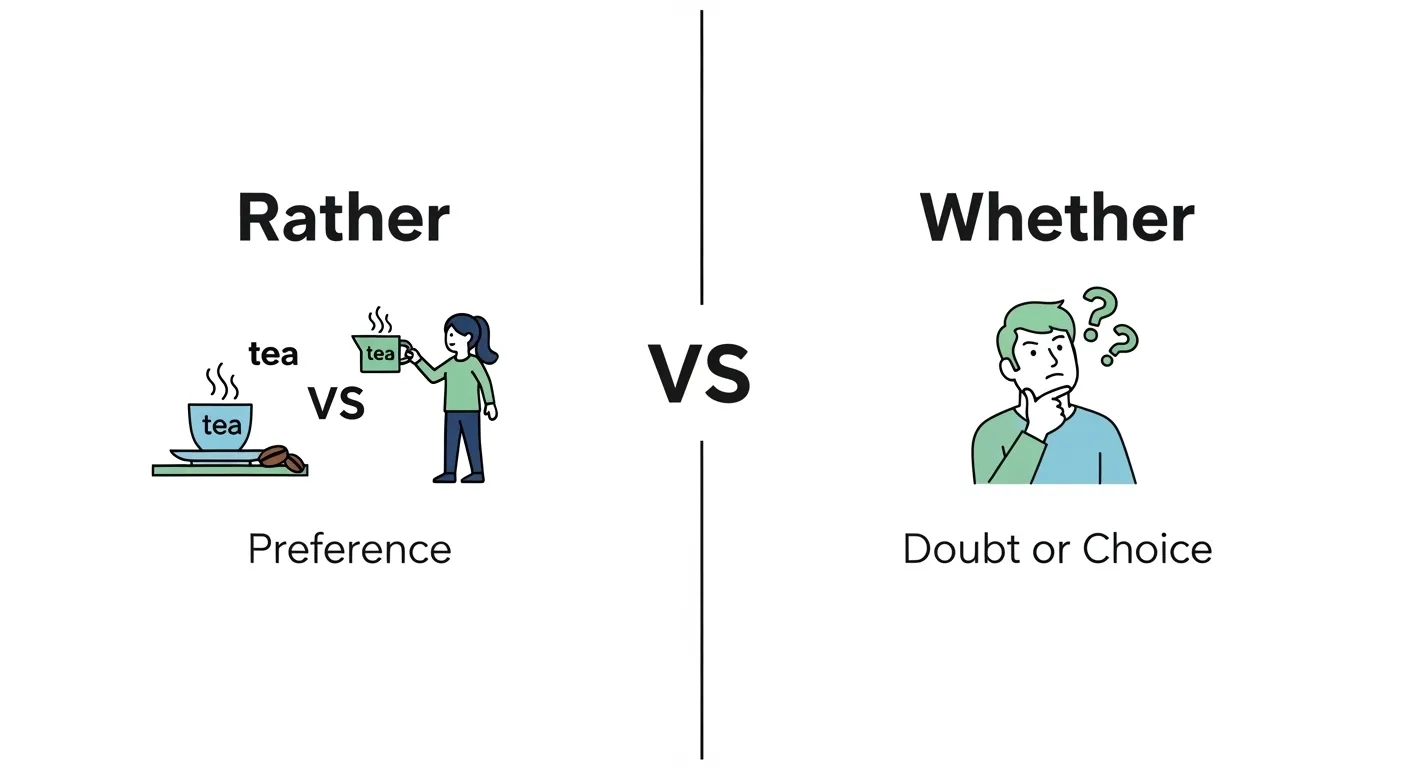
- Rather = shows preference or choice
- Whether = shows doubt or options
People search for “rather or whether” because they want to write correct sentences in emails, exams, or daily communication. The confusion often comes from not knowing the exact role each word plays in a sentence.
In this guide, you will learn the difference in a very simple way. You will see clear rules, easy examples, and helpful tips. By the end, you will know exactly when to use “rather” and when to use “whether” without confusion.
Rather or Whether – Quick Answer
Rather
- Meaning: Shows preference
- Use: When you choose one thing over another
Examples:
- I would rather stay home.
- She prefers tea rather than coffee.
Whether
- Meaning: Shows doubt, choice, or condition
- Use: When there are options or uncertainty
Examples:
- I don’t know whether he will come.
- She asked whether we are ready.
Quick Tip
- Use rather for preference
- Use whether for doubt or choices
The Origin of Rather or Whether
Both words come from Old English.
- Rather comes from hraðor, meaning “more quickly” or “more willingly.” Over time, it came to show preference.
- Whether comes from hwæther, meaning “which of two.” It was used to show choices or alternatives.
This history explains their meanings today:
- “Rather” = preference
- “Whether” = choice or uncertainty
British English vs American English Spelling
There is no spelling difference between British and American English.
Both use:
- rather
- whether
Comparison Table
| Word | Meaning | Example | US English | UK English |
| Rather | Preference | I’d rather go | Same | Same |
| Whether | Choice/doubt | Whether he comes | Same | Same |
Which Spelling Should You Use?
Use “Rather” When:
- You are expressing a preference
- You are comparing choices
Example:
I would rather read than watch TV.
Use “Whether” When:
- You are unsure
- You are talking about options
Example:
I don’t know whether she agrees.
Audience-Based Advice
- US audience: Follow standard rules
- UK/Commonwealth: Same usage
- Global writing: Use simple sentences to avoid confusion
Common Mistakes with Rather or Whether
Mistake 1: Using “rather” instead of “whether”
❌ I don’t know rather he will come.
✔ I don’t know whether he will come.
Mistake 2: Using “whether” for preference
❌ I would whether stay home.
✔ I would rather stay home.
Mistake 3: Mixing both incorrectly
❌ I rather don’t know whether to go.
✔ I don’t know whether to go.
✔ I would rather stay home.
Rather or Whether in Everyday Examples
Emails
- I would rather discuss this later.
- Please confirm whether you are available.
News Writing
- Citizens would rather save money.
- Officials are unsure whether the plan will work.
Social Media
- I’d rather sleep today!
- Not sure whether to watch this movie.
Formal Writing
- Participants would rather choose option A.
- The study examined whether results were accurate.
Rather or Whether – Google Trends & Usage Data
The keyword “rather or whether” is commonly searched.
Why People Search This
- Grammar confusion
- Writing better English
- Academic and professional use
Popular Regions
- United States
- United Kingdom
- India
- Pakistan
Usage Insight
- “Rather” is common in speech and informal writing
- “Whether” is common in formal and academic writing
Search trends show both words are widely used but in different contexts.
Comparison Table (Side-by-Side)
| Feature | Rather | Whether |
| Meaning | Preference | Choice/Doubt |
| Usage | Informal & formal | More formal |
| Function | Shows choice preference | Shows uncertainty |
| Example | I’d rather go | Whether he comes |
| Type | Adverb | Conjunction |
FAQs About Rather or Whether
1. What is the main difference between rather and whether?
“Rather” shows preference, while “whether” shows doubt or options.
2. Can I use “rather” instead of “whether”?
No, they are used in different situations.
3. Is “whether” used in questions?
Yes, especially indirect questions.
4. Can “rather” be used in formal writing?
Yes, but it is more common in everyday language.
5. Which word is more common?
Both are common, but used in different contexts.
6. How can I remember the difference?
Think: rather = prefer, whether = wonder
7. Is this mistake common?
Yes, many learners confuse them.
Conclusion
The difference between “rather” and “whether” is simple once you understand their roles. “Rather” is used to show preference. It tells what you like more or choose over something else. On the other hand, “whether” is used to show doubt or options. It helps when you are unsure or deciding between choices.
These two words are not interchangeable, so using the wrong one can change the meaning of your sentence. A simple way to remember is: use “rather” when you prefer something, and use “whether” when you are unsure.
There is no difference between British and American English, so the rules stay the same worldwide. With a little practice, you will start using both words correctly without thinking.
Keep your sentences simple and clear. This will help you avoid mistakes and improve your writing. Once you master this small difference, your English will sound more natural and professional.
Learn more related article:
Breech or Breach: Which Word Is Correct ?

I am Robert Tressell, the pen name of Robert Noonan, a British–Irish novelist and political writer. I am best known for my novel The Ragged-Trousered Philanthropists, which presents a strong depiction of working-class life and social inequality. My work remains influential in English literature and social thought.