Many people are confused about the correct word: roomer or boarder. You may see both terms used in housing ads, rental agreements, hotels, hostels, or even pet services. Because these words sound similar and relate to living arrangements, people often mix them up.
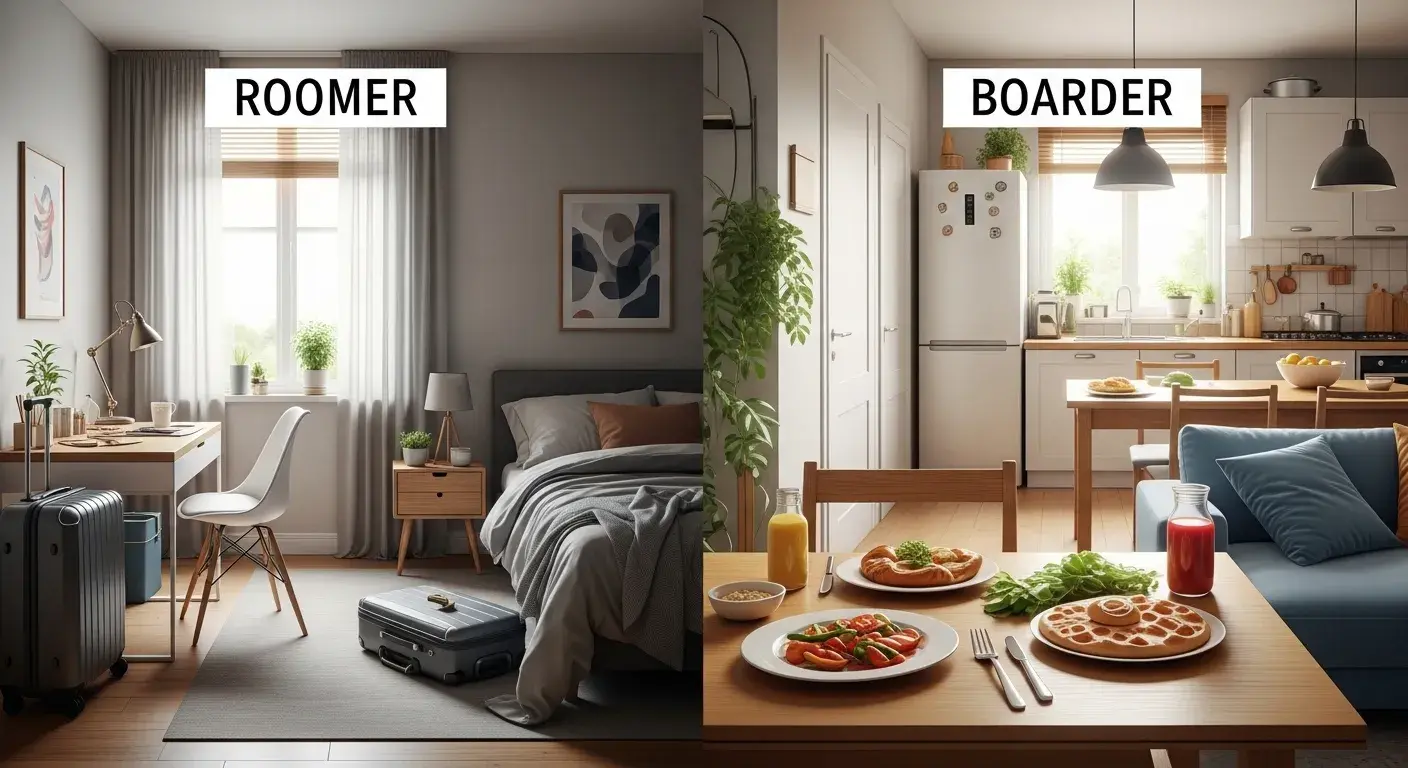
A roomer rents a room only, while a boarder receives meals along with a place to stay.
This confusion happens because English has many old terms connected to housing and lodging. Some words describe space, while others describe services.
Over time, their meanings became closely linked, making it harder for people to tell them apart. In casual conversation, many people use one word when they actually mean the other.
Using the wrong word can cause misunderstandings. In rental listings, legal documents, or professional writing, accuracy matters.
Calling someone a boarder when no meals are provided can be misleading. Likewise, calling someone a roomer may sound incomplete if food is included.
This article clears up the confusion once and for all. You will learn the correct meanings, origins, spelling rules, common mistakes, and how to use roomer or boarder correctly in real-life situations.
Roomer or Boarder – Quick Answer
A roomer is a person who rents only a room in a house or building.
A boarder is a person who rents a room and receives meals.
Examples
- She is a roomer who rents one bedroom in a shared house.
- He is a boarder who stays with a family and eats meals with them.
The Origin of Roomer or Boarder
The word roomer comes from the word room, which refers to a space used for living or sleeping. It became common in the 19th century when people rented spare rooms in private homes.
The word boarder comes from the word board, which originally meant a table for meals. In older English, room and board meant housing plus food. A boarder paid for both a place to sleep and daily meals.
Because both words relate to lodging, they are often confused. Over time, many people forgot that food is the key difference between the two.
British English vs American English Spelling
There is no spelling difference between British and American English for these words. However, usage frequency differs slightly.
| Term | American English | British English |
| Roomer | Common | Less common |
| Boarder | Common | Common |
In British English, lodger is often used instead of roomer, but boarder still keeps its meaning.
Which Spelling Should You Use?
American English
Use roomer for someone renting a room only.
Use boarder if meals are included.
British / Commonwealth English
Use boarder for room + meals.
Use lodger instead of roomer when possible.
Global and Professional Writing
Use boarder only when food is provided.
Use roomer when referring strictly to room rental.
Choosing the correct word improves clarity and professionalism.
Common Mistakes with Roomer or Boarder
Mistake 1: Using boarder for any renter
❌ He is a boarder who rents one room.
✅ He is a roomer who rents one room.
Mistake 2: Forgetting the food factor
❌ She is a roomer and gets meals daily.
✅ She is a boarder and gets meals daily.
Mistake 3: Confusing boarder with border
❌ The boarder of the country
✅ The border of the country
Boarder and border are completely different words.
Roomer or Boarder in Everyday Examples
Emails
- The roomer will move in on Monday.
- We accept one boarder with full meals.
News
- The homeowner rents rooms to students and visiting roomers.
- The historic inn still hosts long-term boarders.
Social Media
- Looking for a quiet roomer
- Being a boarder feels like living with family
Formal Writing
- The contract defines the rights of the roomer.
- Boarders receive accommodation and meals.
Roomer or Boarder – Google Trends & Usage Data
Search data shows that:
- Roomer is searched more in rental and housing contexts.
- Boarder is searched in education, hostels, and pet boarding contexts.
In the US, roomer is more common in real estate searches.
In the UK and Australia, boarder often refers to school boarding or lodging with meals.
This shows people search these terms when they want clarity about services included.
Comparison Table: Roomer vs Boarder
| Feature | Roomer | Boarder |
| Rents a room | Yes | Yes |
| Gets meals | No | Yes |
| Common in US | Yes | Yes |
| Used in contracts | Yes | Yes |
| Related phrase | Room rental | Room and board |
FAQs: Roomer or Boarder
Is roomer a real word?
Yes. Roomer is a correct English word meaning someone who rents a room.
Does a boarder always get food?
Yes. Meals are what make someone a boarder.
Is boarder the same as border?
No. Boarder is a person. Border is a boundary.
Which word sounds more formal?
Boarder sounds slightly more formal due to its historical use.
Can pets be boarders?
Yes. In pet services, animals staying with food and care are called boarders.
Is roomer used in legal writing?
Yes, especially in rental and housing agreements.
Can one person be both?
No. A person is either a roomer or a boarder, based on meals.
Conclusion
The difference between roomer vs boarder is simple but important. A roomer rents only a room, while a boarder receives both housing and meals. This small distinction can make a big difference in meaning, especially in professional, legal, or rental contexts.
Many people confuse these words because they are closely related and often appear together. However, remembering the phrase “room and board” makes the difference clear. If food is included, the correct word is boarder. If not, roomer is the right choice.
Using the correct term improves clarity, avoids misunderstandings, and makes your writing sound more professional. Whether you are writing a rental ad, an email, a contract, or a blog post, choosing the right word matters.
Now that you understand the meanings, origins, and proper usage, you can confidently use roomer or boarder in any situation.
Learn more:
Palette or Palate: What’s the Difference? (2026)

I am Robert Tressell, the pen name of Robert Noonan, a British–Irish novelist and political writer. I am best known for my novel The Ragged-Trousered Philanthropists, which presents a strong depiction of working-class life and social inequality. My work remains influential in English literature and social thought.