Have you ever written a sentence like “She sais she is busy” and then paused to check if it is right? You are not alone. Many people search for “says or sais” because both words sound the same when spoken.
English pronunciation can be tricky, and spelling does not always match sound. This makes small words like says easy to misspell.
The confusion often happens when typing fast, learning English, or relying on sound instead of spelling rules. Since says is pronounced like “sez,” many writers guess the spelling and end up with sais, which looks reasonable but is not correct in English.
This article clears up that confusion once and for all. You will learn which spelling is correct, why the mistake happens, and how both British and American English treat the word.
You will also see common mistakes, real-life examples, and simple advice you can trust. By the end, you will feel confident every time you choose between says or sais.
Says or Sais – Quick Answer
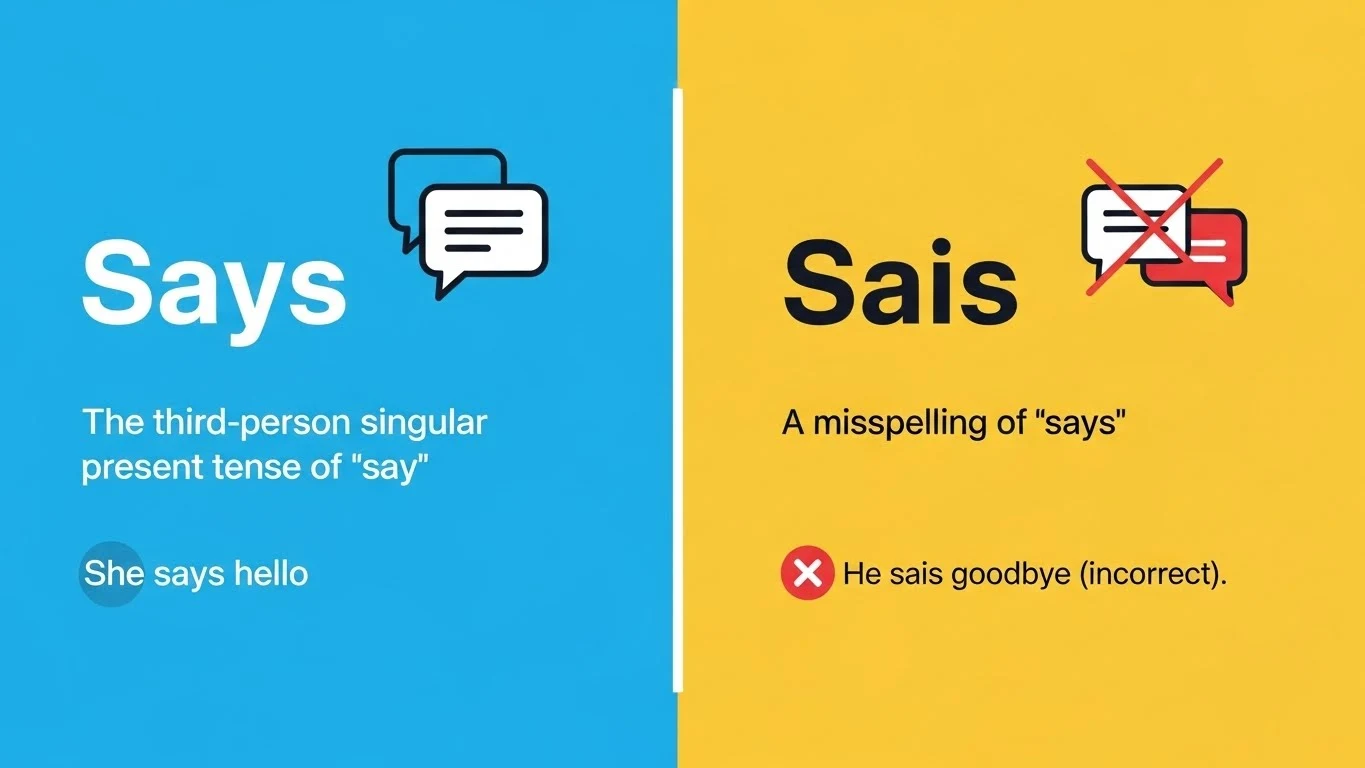
“Says” is correct. “Sais” is incorrect in English.
- ✅ Says: correct spelling
Example: He says he is ready. - ❌ Sais: incorrect spelling
Example: He sais he is ready. (wrong)
says or sais meaning:
Says means to speak, tell, or state something and is the correct form of the verb say.
Sais has no meaning in English and is simply an incorrect spelling of says.
There is only one correct form in English: says.
The Origin of Says or Sais
The word says comes from the verb say, which has roots in Old English secgan, meaning “to speak.” Over many years, English spelling and pronunciation changed. The spelling says stayed the same, but the sound shifted to “sez.”
The incorrect spelling appears because people try to spell the word the way it sounds. In some other languages, similar spellings exist, which can also influence learners. However, English spelling rules do not allow sais as a correct form.
British English vs American English Spelling
There is no spelling difference between British and American English.
| Variant | Correct Spelling | Example |
| American English | says | She says it is fine. |
| British English | says | She says it is fine. |
Which Spelling Should You Use?
No matter your audience:
- US audience: Use says
- UK/Commonwealth audience: Use says
- Global audience: Use says
There are no exceptions.
Common Mistakes with Says or Sais
Here are frequent errors and fixes:
- ❌ The teacher sais the test is hard.
✅ The teacher says the test is hard. - ❌ She sais no to the offer.
✅ She says no to the offer. - ❌ Spelling by sound
✅ Remember: say → says
Says or Sais in Everyday Examples
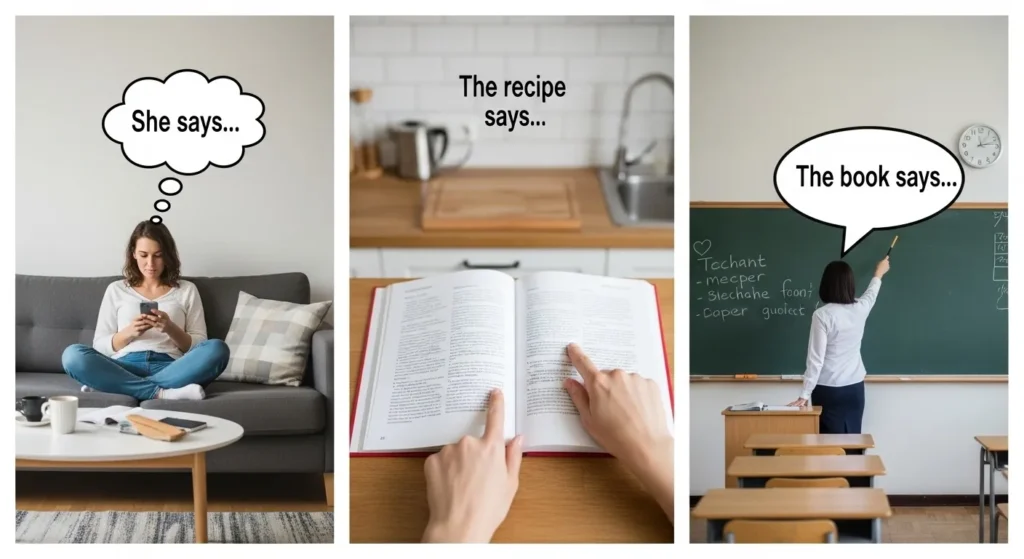
Emails:
- He says the meeting starts at noon.
News:
- The report says prices will rise.
Social Media:
- She says this song is amazing 🎵
Formal Writing:
- The study says the results are clear.
Says vs Sais – Google Trends & Usage Data
Search trends show that “says or sais” is often searched by students, ESL learners, and writers checking spelling. These searches are common worldwide.
Books, articles, and news sources always use says. Sais appears mostly in spelling questions and typing errors. This shows that people search the keyword to fix a mistake, not because both forms are correct.
Comparison Table: Keyword Variations
| Spelling | Correct? | Notes |
| says | ✅ Yes | Correct English |
| sais | ❌ No | Common spelling error |
FAQs
1. Is “sais” ever correct in English?
No. It is always incorrect.
2. Is the spelling different in British English?
No. Both use says.
3. Is it “it says” or “it sais”?
“It says” is correct in English.
Example: It says the door is locked.
4. Is it “she says” or “she sais”?
“She says” is the correct form in English.
Example: She says the plan is ready.
5. How do you spell “say”?
The correct spelling is say (S-A-Y).
Example: I want to say thank you.
6. How do you spell says?
The correct spelling is says (S-A-Y-S).
Example: He says the answer is correct.
7. Is it “he says” or “he sais”?
“He says” is the correct spelling in English.
Example: He says the project is finished.
8. Is it “says oder sais”?
“Says” is the correct spelling in English.
Example: He says the answer is right.
9. How to spell sais?
The correct spelling is says.
Example: She says she is ready.
10. Is it “says” or “sais”?
“Says” is the correct spelling.
Example: It says the rules are clear.
Conclusion
The confusion between says or sais comes from pronunciation, not grammar. English often spells words differently from how they sound, and says is a perfect example. Even though it sounds like “sez,” the correct spelling is always says.
There is no difference between British and American English, and there is no situation where sais is correct in English writing. Using the right spelling helps your writing look clear, accurate, and professional.
If you remember one simple rule, remember this: the verb “say” becomes “says” in the present tense. With that in mind, you will never struggle with says or sais again.
Learn more about:
Used or Use: Which One Is Correct and When to Choose Each

I am Robert Tressell, the pen name of Robert Noonan, a British–Irish novelist and political writer. I am best known for my novel The Ragged-Trousered Philanthropists, which presents a strong depiction of working-class life and social inequality. My work remains influential in English literature and social thought.