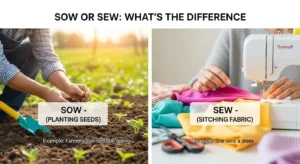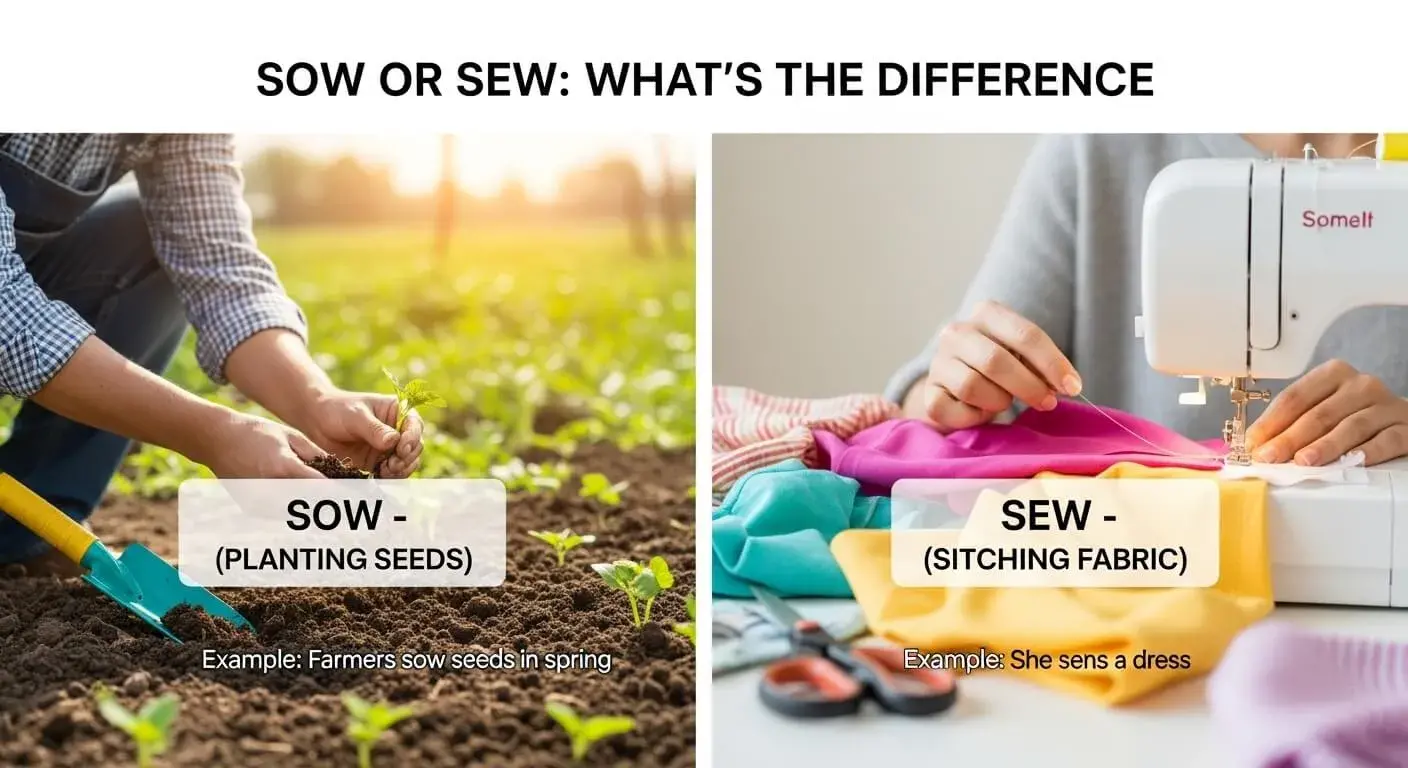
Many people search “sow or sew” because the words sound almost the same. When spoken, they can be confusing. But their meanings are very different. One word is about planting seeds, and the other is about stitching fabric.
This confusion happens often in writing. For example, someone might write “I will sow my shirt” when they really mean “I will sew my shirt.” Spellcheck tools may not always catch this mistake because both words are correct English words. They just mean different things.
Students, writers, and English learners often want a quick answer. They want to know which word to use in emails, school work, or professional writing. Understanding the difference helps you avoid common mistakes.
This guide will clearly explain sow or sew, where the words come from, how to use them, and how to choose the correct one. By the end, you will know exactly when to use sow and when to use sew.
Sow or Sew – Quick Answer
Sow and sew sound similar but have different meanings.
- Sow → to plant seeds in soil
- Sew → to join fabric using needle and thread
Examples
Sow
- The farmer will sow seeds in the field.
- We will sow flowers in the garden.
Sew
- My grandmother will sew a dress.
- She learned how to sew buttons.
A simple way to remember:
- Sow = Seeds
- Sew = Stitching
The Origin of Sow or Sew
The words sow and sew come from Old English, but they developed from different roots.
Sow
The word sow comes from the Old English word “sāwan.” It meant to scatter seeds on land for growing plants. Farmers used this word for centuries when planting crops.
Sew
The word sew comes from Old English “siwian.” It meant to stitch cloth with thread. This word became common as clothing and textile work grew.
Even though they sound alike today, they were always meant to describe two different actions.
British English vs American English Spelling
Unlike some English words, sow and sew have the same spelling in both British and American English. There is no regional spelling difference.
The only confusion comes from pronunciation and meaning.
| Word | Meaning | Example Sentence |
| Sow | Plant seeds | Farmers sow seeds in spring. |
| Sew | Stitch fabric | She will sew a new jacket. |
Both forms are correct. The key is choosing the right meaning.
Which Spelling Should You Use?
You should choose the word based on the action you are describing.
Use sow when talking about:
- Planting seeds
- Farming
- Gardening
Example:
“The gardener will sow tomato seeds tomorrow.”
Use sew when talking about:
- Clothing
- Fabric repair
- Making garments
Example:
“She will sew a button on the shirt.”
Simple Tip
- Seeds → Sow
- Stitches → Sew
This rule works in every English-speaking country.
Common Mistakes with Sow or Sew
Many people mix up these words because they sound the same.
Mistake 1
❌ “She will sow a new dress.”
✔ Correct: “She will sew a new dress.”
Mistake 2
❌ “The farmer will sew corn seeds.”
✔ Correct: “The farmer will sow corn seeds.”
Mistake 3
❌ “I need to sow my shirt button.”
✔ Correct: “I need to sew my shirt button.”
Always check the meaning before writing.
Sow or Sew in Everyday Examples
Here are simple real-life examples.
“Hi Sarah, I plan to sow vegetable seeds this weekend in my garden.”
News
“Local farmers sowed wheat seeds early this year due to warm weather.”
Social Media
“Just learned how to sew my own clothes today!”
Formal Writing
“Farmers often sow crops in early spring to ensure healthy growth.”
Sow or Sew – Google Trends & Usage Data
Search data shows people often look up “sow or sew difference” when writing or studying English.
Where searches are common
- United States
- United Kingdom
- Canada
- Australia
- India
Context of searches
People search sow mostly in topics like:
- Farming
- Gardening
- Agriculture
People search sew mostly in topics like:
- Fashion
- Clothing repair
- Sewing tutorials
This shows the words are popular in different fields.
Comparison Table: Sow vs Sew
| Feature | Sow | Sew |
| Meaning | Plant seeds | Stitch fabric |
| Activity | Farming, gardening | Sewing, tailoring |
| Example | Sow corn seeds | Sew a dress |
| Origin | Old English “sāwan” | Old English “siwian” |
| Common Confusion | Sounds like sew | Sounds like sow |
FAQs
1. Are sow and sew pronounced the same?
Often yes. In many accents they sound the same, which causes confusion.
2. What does sow mean?
Sow means to plant seeds in soil.
3. What does sew mean?
Sew means to stitch fabric with a needle and thread.
4. Is sow used only in farming?
Mostly yes. It is common in gardening and agriculture.
5. Can sew be used in clothing repair?
Yes. People sew buttons, clothes, and fabric pieces.
6. Do British and American English spell these words differently?
No. Both spellings are the same worldwide.
7. How can I remember the difference?
Think:
Sow → Seeds
Sew → Stitching
Conclusion
The words sow and sew are simple but often confused. They sound alike in speech, which leads many people to mix them up in writing. However, their meanings are completely different.
The word sow is connected to farming and gardening. It means to plant seeds in soil so that crops or flowers can grow. Farmers and gardeners use this word when talking about planting fields or gardens.
The word sew, on the other hand, relates to fabric and clothing. It means to stitch pieces of cloth together with a needle and thread. Tailors, designers, and hobbyists often use this word when making or repairing clothes.
Luckily, there is no difference between British and American spelling for these words. The key is simply choosing the correct meaning.
Remember this easy rule: Seeds are sown, and clothes are sewn. By keeping this simple idea in mind, you can avoid mistakes and use both words correctly in everyday writing.
Learn molre related article:
Dealt or Delt: Which Spelling Is Correct?

I am Olga Tokarczuk, a Polish novelist and essayist whose work is widely studied for its rich vocabulary, precise language, and literary expression. My writings are often referenced in academic and linguistic contexts for their clarity of diction and thoughtful use of words. I am a prominent figure in modern world literature.