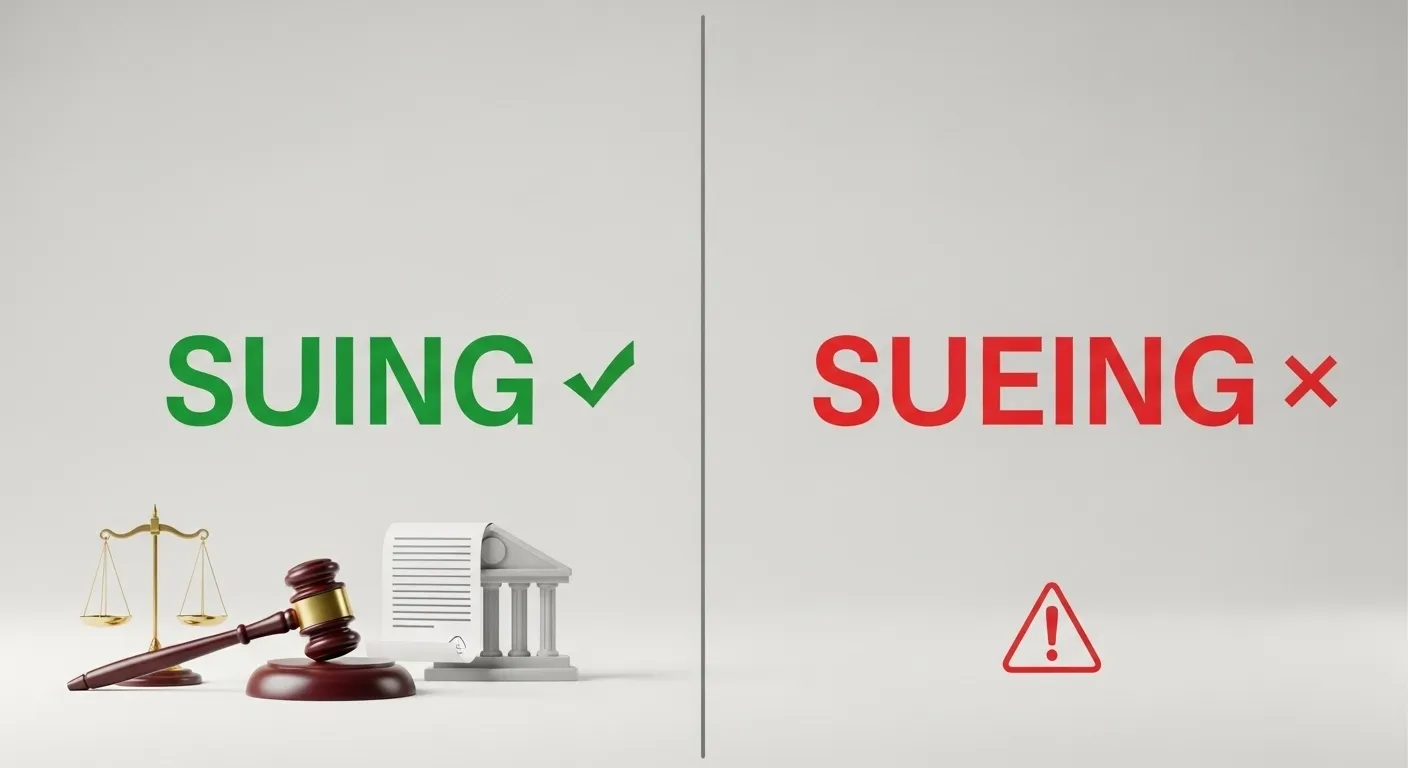
Suing is the correct spelling. Sueing is incorrect.
Many people search for “suing or sueing” because the spelling feels confusing at first glance. When you take the verb sue and add -ing, it seems logical to write sueing. After all, the base word ends with an e, so why would that letter disappear?
This confusion is common among students, writers, bloggers, and even professionals who deal with legal topics.
It often shows up in emails, news articles, contracts, and social media posts. People pause and wonder: Do I keep the “e” or drop it? Is this an American vs British spelling difference?
The keyword exists because English spelling rules are not always obvious. Some verbs keep the e, while others drop it. Without knowing the rule, mistakes happen easily.
This article solves that problem clearly. First, it gives a direct answer. Then, it explains the rule behind the spelling, the word’s origin, and how usage works in both British and American English. By the end, you will know exactly which spelling to use and why.
Suing or Sueing – Quick Answer
Suing ✅ is the correct spelling.
Sueing ❌ is incorrect.
Examples:
- The company is suing for damages.
- She is suing her former employer.
- ❌ He is sueing the landlord. (incorrect)
The Origin of Suing or Sueing
The verb sue comes from Old French suer and Latin sequi, meaning “to follow” or “to pursue.” Over time, it developed the legal meaning of bringing a case to court.
In English, when a verb ends in a silent “e”, the usual rule is simple:
👉 Drop the “e” before adding “-ing.”
Examples:
- make → making
- write → writing
- sue → suing
The spelling sueing does not follow English spelling rules. It appears only because writers try to keep the base word visible, not because the language allows it.
So, the difference exists due to spelling rules, not because of history or regional variation.
British English vs American English Spelling
There is no difference between British and American English here.
| Spelling | American English | British English |
| Suing | Correct | Correct |
| Sueing | Incorrect | Incorrect |
Both varieties of English follow the same rule: drop the silent e before adding -ing.
Which Spelling Should You Use?
The choice is easy because only one spelling is correct.
- US audience: Use suing
- UK/Commonwealth audience: Use suing
- Global audience: Use suing
There is no context where sueing is preferred or acceptable in standard English.
Simple rule to remember:
👉 Silent e + ing = drop the e.
Common Mistakes with Suing or Sueing
Mistake 1: Keeping the “e”
❌ sueing
✔ suing
Mistake 2: Thinking sueing is British spelling
❌ Regional difference
✔ Same spelling everywhere
Mistake 3: Mixing spellings in one text
❌ suing / sueing
✔ Use suing consistently
Mistake 4: Overthinking legal terms
✔ Follow the basic spelling rule
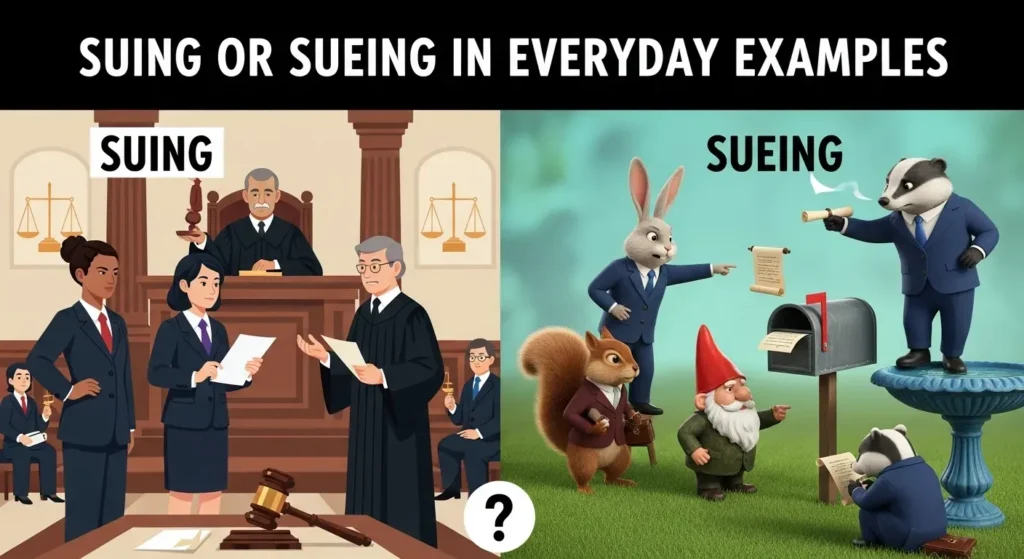
Suing or Sueing in Everyday Examples
Emails:
- “They are considering suing the contractor.”
News:
- “The actor is suing the studio over contract disputes.”
Social Media:
- “Can you really get rich by suing big companies?”
Formal Writing:
- “The plaintiff is suing for breach of contract.”
Suing or Sueing – Google Trends & Usage Data
Search data shows that “suing” dominates worldwide. However, “sueing” still appears in searches because people are unsure about the spelling.
By context:
- Legal news and documents → Suing
- Spelling questions → Suing or sueing
- Casual writing errors → Sueing
By region:
- USA: High usage of suing, frequent searches for spelling help
- UK: Same pattern as the US
- Global: Suing is standard everywhere
Keyword Comparison Table
| Feature | Suing | Sueing |
| Correct spelling | Yes | No |
| Follows spelling rules | Yes | No |
| Used in legal writing | Yes | No |
| Dictionary accepted | Yes | No |
| SEO relevance | High | Confusion-based |
FAQs
1. Is sueing ever correct?
No. Sueing is always incorrect.
2. Why do people spell it sueing?
Because they try to keep the base word sue visible.
3. Does British English allow sueing?
No. Both British and American English use suing.
4. What is the base form of suing?
The base verb is sue.
5. Does this rule apply to other verbs?
Yes. Make → making, write → writing.
6. Is suing a legal term?
Yes. It means taking legal action against someone.
7. Can sueing appear in informal writing?
It may appear, but it is still incorrect.
Conclusion
The difference between suing or sueing is clear once you understand the spelling rule. Suing is the only correct form. English drops the silent e before adding -ing, and the verb sue follows this rule just like many others.
The spelling sueing appears because it looks logical at first glance. However, logic does not always match English spelling rules. Dictionaries, legal documents, and professional writing all use suing without exception.
There is also no regional variation to worry about. British English, American English, and global English all agree on this spelling. That makes the choice simple and safe in every context.
For clear and professional writing, always use suing. Whether you are writing a legal article, a news report, an email, or a blog post, the correct spelling builds credibility and avoids distraction. When in doubt, remember this rule: drop the silent “e” before adding “-ing.” That one rule will save you from many spelling mistakes.
Learn about:
Colander or Strainer: What’s the Difference ?(2026)

I am Robert Tressell, the pen name of Robert Noonan, a British–Irish novelist and political writer. I am best known for my novel The Ragged-Trousered Philanthropists, which presents a strong depiction of working-class life and social inequality. My work remains influential in English literature and social thought.