People often search for “trick or treater” because they are unsure how to write it. Is it one word, two words, or a phrase? You may see forms like trick-or-treater, trick or treator, or even trickortreater online. This creates confusion in emails, school writing, blogs, captions, and news stories about Halloween.
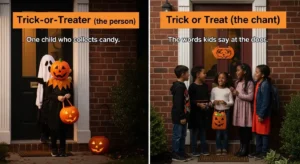
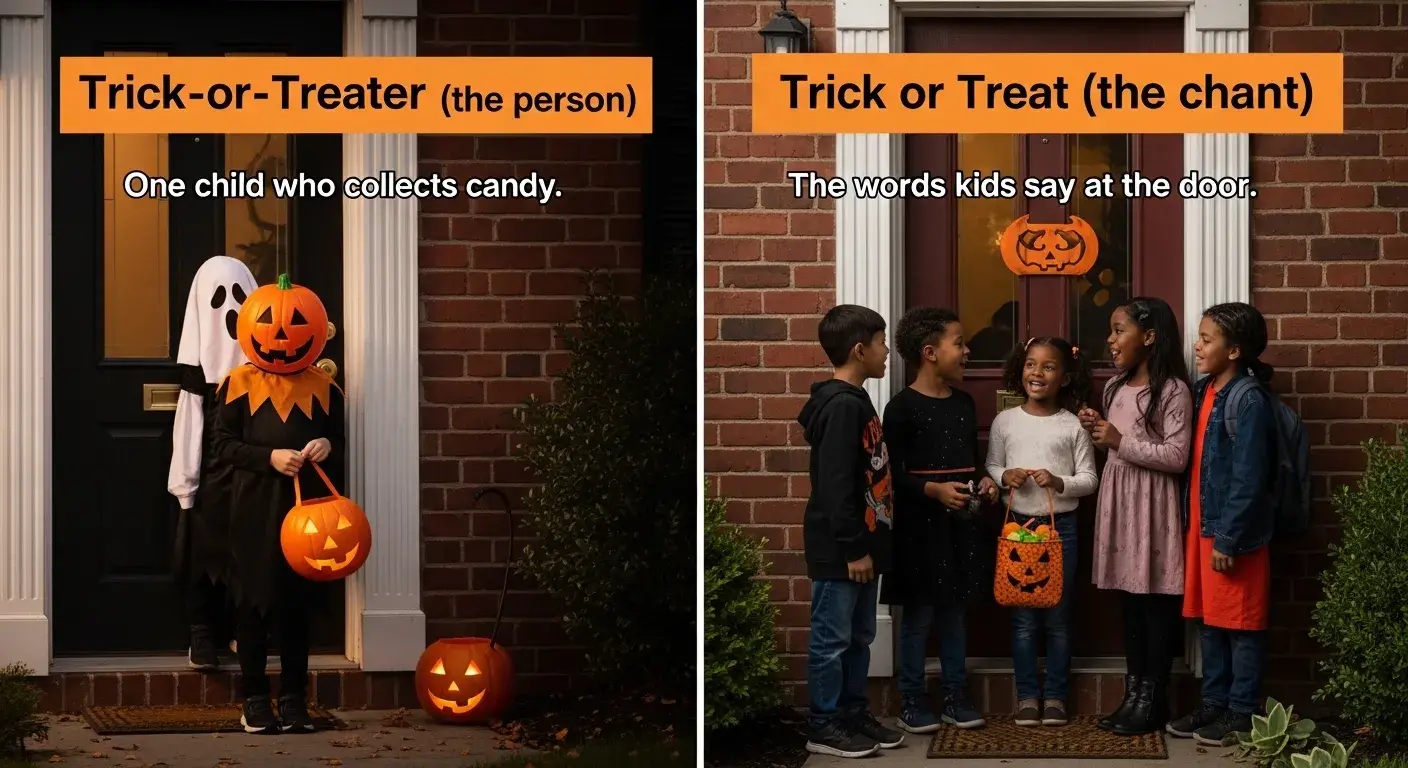
The correct form is trick-or-treater for one person and trick-or-treaters for many people. The phrase trick or treat is the chant kids say. They are not the same thing.
People want to write correctly for cards, invites, school posts, and social media. Spellcheck does not always help with hyphens. Some style guides allow small changes, but the meaning stays the same.
This guide clears the confusion. You will learn the origin, US vs UK usage, common mistakes, examples from real life, and which form to use for your audience. By the end, you will write trick-or-treater with confidence every time.
Trick or Treater – Quick Answer
- Correct noun (person): trick-or-treater
Example: A trick-or-treater knocked on our door. - Plural: trick-or-treaters
Example: The street was full of trick-or-treaters. - The chant (not a person): trick or treat
Example: The kids shouted, “Trick or treat!”
Trick or Treater Meaning (Who Is a Trick or Treater?)
A trick-or-treater is a person, usually a child, who goes door to door on Halloween to ask for candy by saying “trick or treat.”
The Origin of Trick or Treater
The phrase trick or treat comes from old Halloween customs in the United States. Children went door to door and asked for candy. Over time, English formed a noun for the person who does the action. English often adds -er to show “the person who does it” (teach → teacher, bake → baker).
So trick or treat became trick-or-treater. The hyphens link the phrase into one noun. This is why the spelling looks long and joined.
British English vs American English Spelling
Both US and UK English use the same forms. The main difference is style, not spelling.
| Form | American English | British English | Correct |
| trick-or-treater | Common | Common | ✅ Yes |
| trick-or-treaters | Common | Common | ✅ Yes |
| trick or treat (chant) | Common | Common | ✅ Yes |
| trickortreater | Rare | Rare | ❌ No |
| trick or treator | Rare | Rare | ❌ No |
Which Spelling Should You Use?
- US audience: Use trick-or-treater (hyphens).
- UK/Commonwealth: Use trick-or-treater (hyphens).
- Global writing: Use trick-or-treater.
- Headlines or casual posts: Some drop hyphens, but the safe, correct form is with hyphens.
Common Mistakes with Trick or Treater
❌ A trick or treator came to our door.
✅ A trick-or-treater came to our door.
❌ Many trickortreaters were outside.
✅ Many trick-or-treaters were outside.
❌ Trick or treater is the chant.
✅ The chant is trick or treat. The person is a trick-or-treater.
Tip:
Chant = trick or treat
Person = trick-or-treater
Trick or Treater in Everyday Examples

Emails:
- Please expect many trick-or-treaters tonight.
News:
- The city shared safety tips for trick-or-treaters.
Social Media:
- So many cute trick-or-treaters on our street!
Formal Writing:
- Volunteers guided trick-or-treaters at the event.
Trick or Treater – Google Trends & Usage Data
Search interest for trick or treater rises every year in October, around Halloween. Most searches come from the US, Canada, the UK, and Australia. People usually search to check spelling, hyphens, or the difference between the chant and the noun. In books, news, and school guides, trick-or-treater is the standard form. Errors like treator appear in casual posts and typos.
Comparison Table (Keyword Variations)
| Variation | Meaning | Correct |
| trick-or-treater | One person who goes for candy | ✅ Yes |
| trick-or-treaters | Many people | ✅ Yes |
| trick or treat | The chant kids say | ✅ Yes |
| trick or treator | Misspelling | ❌ No |
| trickortreater | Joined form | ❌ No |
FAQs About Trick or Treater
1) Is “trick or treater” one word?
No. The correct noun uses hyphens: trick-or-treater.
2) What is the plural form?
Trick-or-treaters.
3) Is “trick or treat” the same as “trick-or-treater”?
No. The chant is trick or treat. The person is a trick-or-treater.
4) Do US and UK English differ here?
No. Both use same wording.
5) Can I drop hyphens in casual posts?
You can, but trick-or-treater is the correct, safe form.
6) Is “treator” correct?
No. The correct ending is -treater.
7) Which form should I use in school or news writing?
Use trick-or-treater and trick-or-treaters.
Conclusion
The phrase trick or treat and the noun trick-or-treater are easy to mix up, but the rule is simple. The chant is trick or treat. Add -s for the plural: trick-or-treaters. Both American and British English follow the same pattern.
The safest choice in formal writing, school work, and news is the hyphenated form. Most mistakes happen when writers drop hyphens or misspell treater as treator. Remember the small rule: chant vs person. If you keep that clear, your writing will look clean and correct every Halloween season.
Read more related post:
Sempai vs Senpai: What’s the Right Word? (2026)

I am Samuel Reedman, a digital English content creator who writes educational comparison posts for learners worldwide. My work emphasizes correct word usage, pronunciation differences, and practical examples for daily communication.