Many people search for “unengaged or disengaged” because the two words seem similar but feel different in tone. Writers, managers, students, and HR professionals often pause and ask: Which one is correct here? Are they interchangeable, or do they mean different things?
This confusion matters because both words describe lack of involvement, but they are not the same. Using the wrong one can change the meaning of a sentence. For example, an employee who is unengaged is not the same as one who is disengaged. One sounds passive. The other sounds active and serious.
People search for this keyword to get a quick, clear answer. They also want examples they can trust for emails, reports, and professional writing. This article solves that problem step by step.
You will get a short answer first. Then you will learn the origin of both words, how they are used in British and American English, and which one fits your audience. By the end, you will know exactly when to use unengaged and when to use disengaged.
Unengaged or Disengaged – Quick Answer
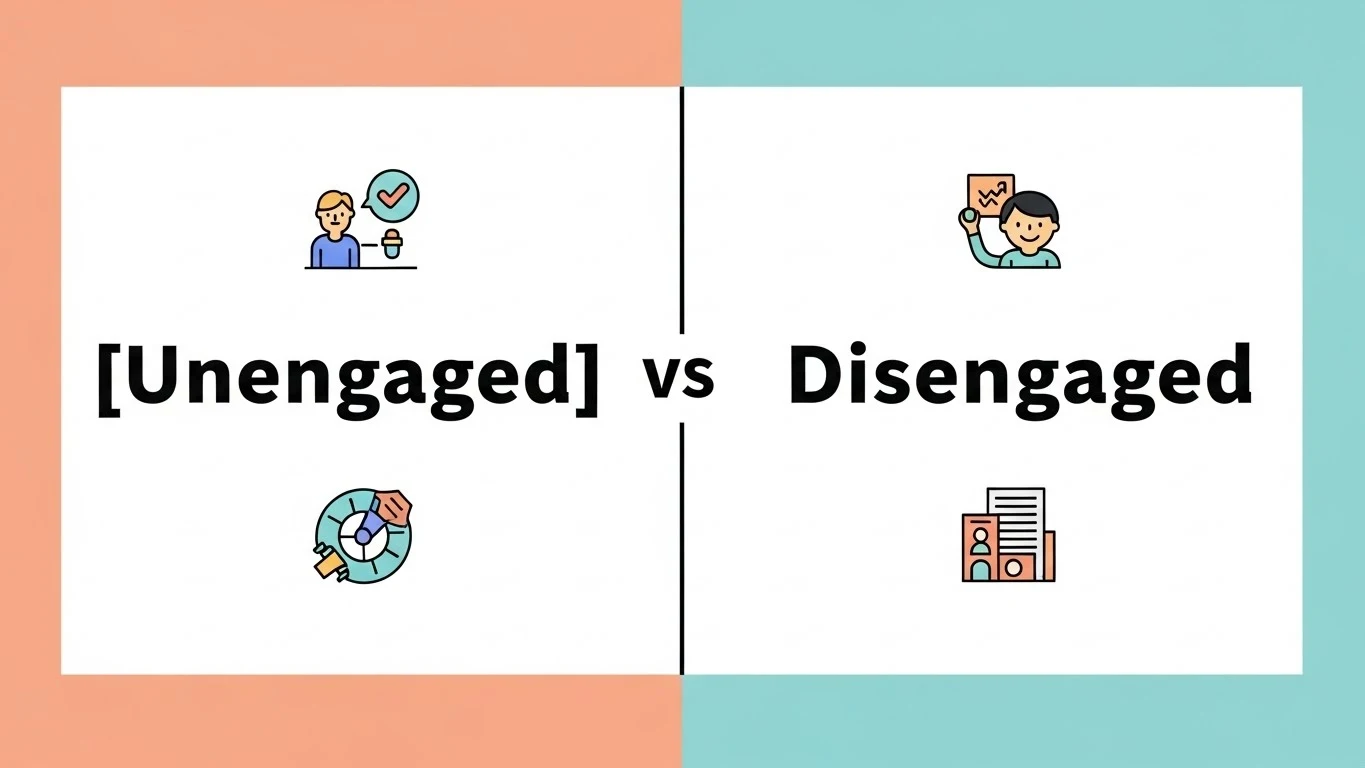
Unengaged means not involved or not interested.
Disengaged means pulled away or emotionally disconnected.
Examples:
- The student looked unengaged during class.
- The employee became disengaged after months of stress.
Key idea:
- Unengaged = neutral or passive
- Disengaged = active withdrawal
The Origin of Unengaged or Disengaged
Both words come from the verb engage, which comes from Old French engager, meaning “to involve” or “to bind.”
- Unengaged uses the prefix un-, meaning “not.”
- Disengaged uses the prefix dis-, meaning “away” or “apart.”
The difference exists because the prefixes show different actions:
- Un- means something never started.
- Dis- means something stopped or was removed.
That is why disengaged often sounds stronger and more negative.
Learn more about: Lama or Llama: What’s the Difference and Which One Is Correct?
British English vs American English Spelling
There is no spelling difference between British and American English for these words. Both regions use the same forms.
| Word | British English | American English |
| Unengaged | Unengaged | Unengaged |
| Disengaged | Disengaged | Disengaged |
The difference is about meaning and tone, not spelling.
Which Spelling Should You Use?
Since spelling is the same, focus on context and audience:
- US workplace writing:
Use disengaged for employee surveys and reports. - UK/Commonwealth writing:
Same rule applies. Meaning matters more than region. - Global or neutral tone:
Use unengaged if you want softer language.
If you want to sound polite or neutral, choose unengaged.
If you want to describe a serious problem, choose disengaged.
Common Mistakes with Unengaged or Disengaged
Here are frequent errors and corrections:
- ❌ The worker is unengaged after quitting mentally
✅ The worker is disengaged after quitting mentally - ❌ Using both words as exact synonyms
✅ Understand the difference in intensity - ❌ Using disengaged for someone never involved
✅ Use unengaged instead
Unengaged or Disengaged in Everyday Examples
Email:
Some team members seem unengaged during meetings.
News:
Polls show many voters feel disengaged from politics.
Social media:
Scrolling all day but still feeling disengaged.
Formal writing:
Disengaged employees reduce productivity and morale.
Unengaged or Disengaged – Google Trends & Usage Data
Search data shows clear patterns:
- Disengaged is searched more often in:
- HR
- mental health
- workplace topics
- Unengaged appears more in:
- education
- surveys
- neutral descriptions
English-speaking countries like the US, UK, Canada, and Australia search for both terms. Disengaged has stronger emotional and professional usage.
Comparison Table: Unengaged vs Disengaged
| Term | Meaning | Tone | Common Use |
| Unengaged | Not involved | Neutral | Education, surveys |
| Disengaged | Pulled away | Strong | HR, psychology |
FAQs
1. Are unengaged and disengaged the same?
No. They have different levels of intensity.
2. Is disengaged more negative?
Yes. It implies withdrawal or loss of interest.
3. Can I use unengaged in professional writing?
Yes. It sounds softer and less judgmental.
4. Which word is better for HR reports?
Disengaged is more common and precise.
5. Do British and American English differ here?
No. Both use the same spelling and meanings.
6. Can a person be both?
Yes. Someone can start unengaged and become disengaged.
7. Which word is better for SEO?
Disengaged has higher search volume in business contexts.
Conclusion
Understanding unengaged or disengaged helps you write with clarity and confidence. While the words look similar, their meanings are not the same. Unengaged describes a lack of involvement. Disengaged describes an active pullback from something once meaningful.
There is no spelling difference between British and American English. The real choice depends on tone and intent. If you want a neutral or gentle description, unengaged works well. If you want to highlight a serious issue, especially in work or emotional contexts, disengaged is the better choice.
For clear communication, always think about how strong your message should sound. Using the right word makes your writing more accurate and professional. When in doubt, match the word to the situation and stay consistent throughout your content.

I am Robert Tressell, the pen name of Robert Noonan, a British–Irish novelist and political writer. I am best known for my novel The Ragged-Trousered Philanthropists, which presents a strong depiction of working-class life and social inequality. My work remains influential in English literature and social thought.