Do you often stop and think: is it “comprable” or “comparable”? This is a very common spelling confusion.
Many people search for this keyword because they use the word in daily writing—emails, reports, school work, and online content. A small spelling mistake can change how professional your writing looks.
The confusion happens because people try to shorten the word and remove a letter, writing “comprable” instead of “comparable.” It may sound similar when spoken, but only one spelling is correct.
This article will give you a quick answer, explain where the word comes from, and show how to use it properly in real-life situations.
Comprable or Comparable – Quick Answer
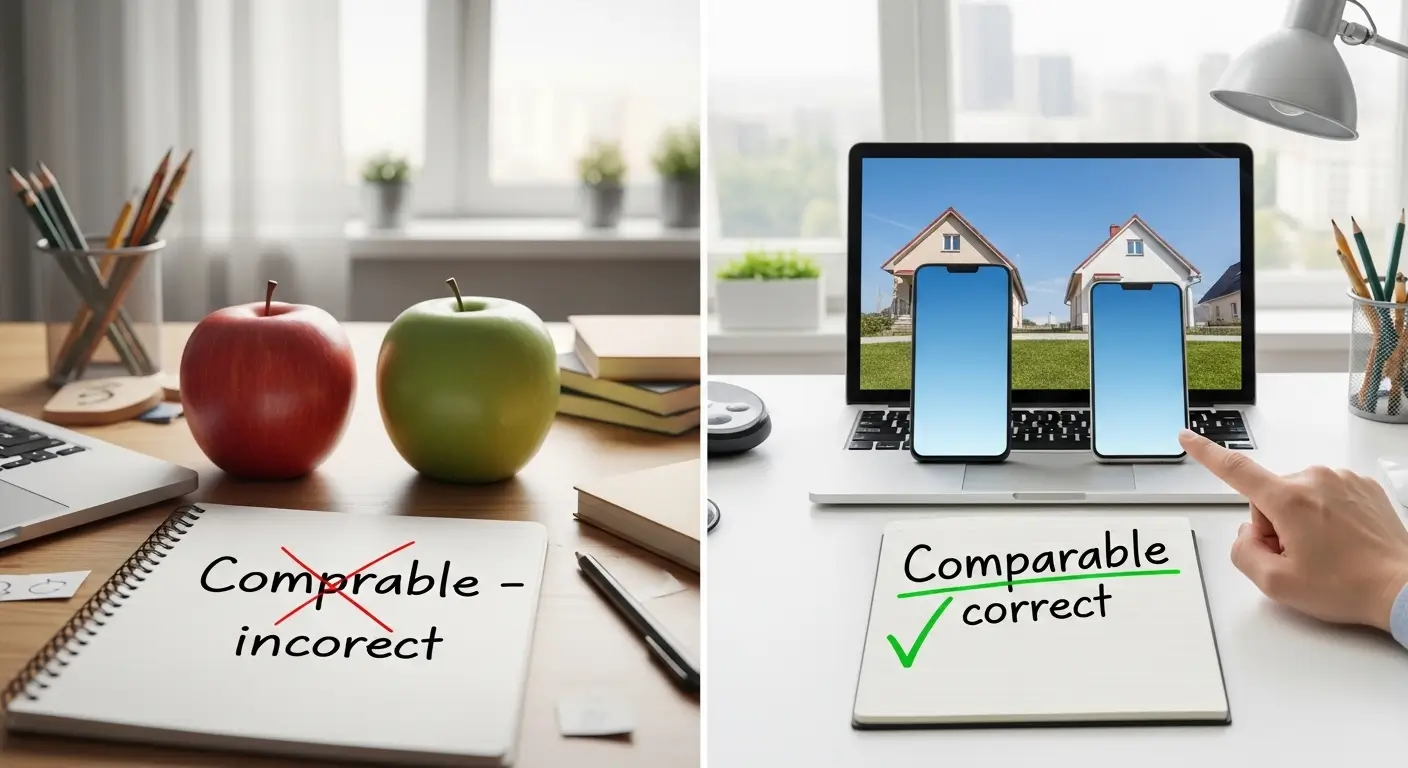
The correct spelling is “comparable.”
“Comprable” is incorrect and should not be used.
Examples:
- Please find a comparable product at a lower price.
- These two houses are comparable in size.
Rule: Always include “para” in the middle → com + para + ble
The Origin of Comprable or Comparable
The word “comparable” comes from the Latin word “comparare,” which means “to compare.” It passed through French and entered English with the same meaning.
The full structure of the word stayed intact over time. That is why “comparable” includes all its parts. The incorrect spelling “comprable” happens when people drop letters to make the word shorter, but this form has no historical or grammatical basis.
British English vs American English Spelling
There is no difference between British and American English for this word. Both use the same spelling.
Comparison Table
| Region | Correct Spelling | Incorrect Spelling |
| American English | comparable | comprable |
| British English | comparable | comprable |
| Canadian English | comparable | comprable |
| Australian English | comparable | comprable |
Important: This word has a universal spelling.
Which Spelling Should You Use?
You should always use “comparable” for every audience.
- For US readers → use comparable
- For UK readers → use comparable
- For global audience → use comparable
There is no situation where “comprable” is correct. Using the wrong spelling can reduce trust in your writing, especially in business or academic work.
Common Mistakes with Comprable or Comparable
Missing Letters
- Wrong: comprable
- Correct: comparable
Pronunciation Confusion
People pronounce it quickly and skip “para,” leading to mistakes.
Typing Errors
Fast typing often drops letters in longer words.
Over-Simplifying
Writers try to shorten the word, which leads to incorrect spelling.
Comprable or Comparable in Everyday Examples
Emails
- We are looking for a comparable price.
News
- The new model offers comparable features.
Social Media
- Find a comparable deal today.
Formal Writing
- The results are comparable to last year’s data.
In all cases, only “comparable” is correct.
Comprable or Comparable – Google Trends & Usage Data
Search data shows that “comprable or comparable” is a frequently searched keyword.
Why people search this:
- Confusion in spelling
- Students learning English
- Writers checking correctness
Popularity by Region:
- United States
- United Kingdom
- India
- Pakistan
Usage Context:
- Academic writing
- Business reports
- Blogging and SEO
- Product comparisons
“Comprable” appears in searches because people want to confirm if it is wrong.
Comparison Table – Comprable vs Comparable
| Feature | Comparable | Comprable |
| Correct Spelling | Yes | No |
| Used in English | Yes | No |
| Accepted Globally | Yes | No |
| Professional Writing | Yes | No |
| Common Mistake | No | Yes |
FAQs
1. Is “comprable” ever correct?
No, it is always incorrect.
2. Why do people write “comprable”?
Because they drop letters while speaking or typing.
3. Is “comparable” the same in US and UK English?
Yes, the spelling is the same worldwide.
4. How can I remember the correct spelling?
Think: compare → comparable (keep the full word).
5. Is “comparable” a formal word?
Yes, it is commonly used in both formal and informal writing.
6. Can I shorten “comparable”?
No, shortening it leads to incorrect spelling.
7. Does spelling affect professionalism?
Yes, correct spelling improves trust and clarity.
Conclusion
The confusion between “comprable” and “comparable” is common, but the answer is clear. The correct spelling is always “comparable.” The incorrect form “comprable” comes from dropping letters, which is not acceptable in proper English.
This word is widely used in business, education, and everyday communication. Since there is no difference between British and American English, it becomes easier to remember the correct form. Always keep the full structure of the word in mind.
Using the correct spelling shows attention to detail and professionalism. Whether you are writing an email, report, or blog post, small corrections like this make your content more reliable. Practice and awareness will help you avoid this mistake in the future.
Learn more article:
Address or Adress – Which Spelling Is Correct?

I am Robert Tressell, the pen name of Robert Noonan, a British–Irish novelist and political writer. I am best known for my novel The Ragged-Trousered Philanthropists, which presents a strong depiction of working-class life and social inequality. My work remains influential in English literature and social thought.