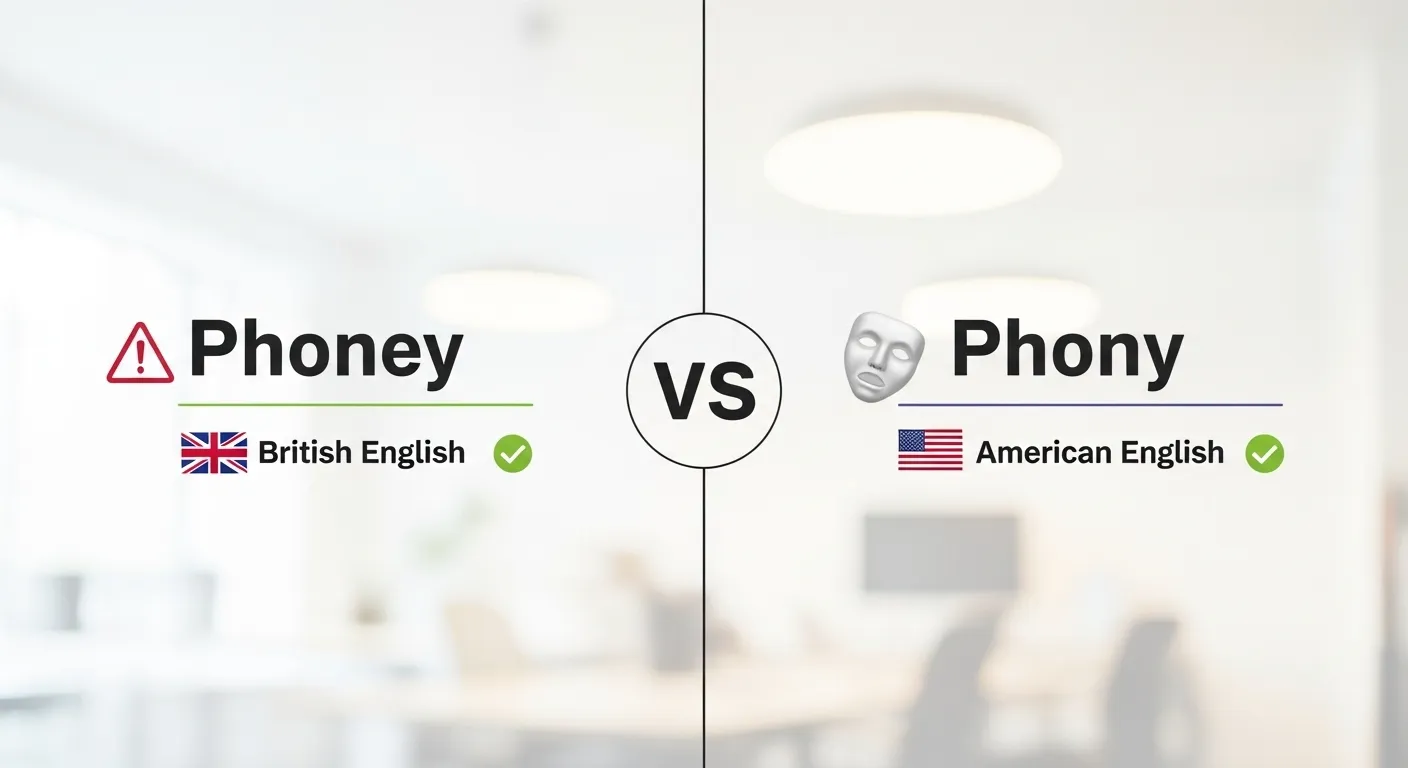
“Phony” and “phoney” both mean fake or not real. “Phony” is the preferred spelling in American English, while “phoney” is used in British English.
Many people search for “phoney or phony” because they are unsure which spelling is correct. Both words look similar and have the same meaning, which creates confusion. This is especially common for writers, students, and non-native English speakers.
Short answer: Phony = American English, Phoney = British English.
The confusion comes from differences in spelling rules between regions. Some English words change slightly depending on whether you are writing for a US or UK audience.
Using the right spelling helps your writing look more natural and professional. It also shows that you understand your audience.
In this article, you will learn the meaning, origin, and correct usage of phoney and phony. You will also see examples, common mistakes, and tips to choose the right form. By the end, you will confidently use the correct spelling in any situation.
Phoney or Phony – Quick Answer
Both words are correct but used in different regions.
- Phony → American English
- Phoney → British English
Meaning:
Both mean fake, not real, or dishonest.
Examples:
- That excuse sounds phony. ✅
- His story seemed phoney. ✅
Rule: Choose based on your audience.
The Origin of Phoney or Phony
The word comes from “phone,” short for telephone. It originally described something done over the phone that was not real or trustworthy.
Over time:
- The meaning expanded to describe anything fake or dishonest
- Two spellings developed: phony and phoney
Why two spellings?
- American English prefers shorter forms (phony)
- British English often keeps extra letters (phoney)
Both forms have the same meaning and history.
British English vs American English Spelling
This is where the difference matters.
| English Type | Preferred Spelling | Example Sentence |
| American English | Phony | That offer is phony. |
| British English | Phoney | His claim sounds phoney. |
| Global Usage | Phony | More widely used online |
The meaning stays the same. Only spelling changes.
Which Spelling Should You Use?
Your choice depends on your audience.
Use phony when:
- Writing for a US audience
- Creating global or online content
- Keeping spelling simple
Use phoney when:
- Writing for a UK audience
- Following British English rules
Audience-based advice:
- US audience → Use phony
- UK/Commonwealth → Use phoney
- Global audience → Prefer phony
Tip: “Phony” is more common worldwide.
Common Mistakes with Phoney or Phony
Here are common errors:
| Mistake | Correction |
| Mixing both spellings | Stay consistent |
| Using “phoney” for US audience | Use “phony” |
| Thinking one is wrong | Both are correct |
| Switching styles in one text | Choose one style |
Incorrect:
- His excuse sounds phony in a UK formal document. ⚠️
Better:
- His excuse sounds phoney. ✅
Tip: Always match spelling with your audience.
Phoney or Phony in Everyday Examples
Emails
- “This message looks phony.”
News
- “Officials warned about phoney claims.”
Social Media
- “That account seems phony.”
Academic Writing
- “The data appeared phoney.”
Business Writing
- “Beware of phony offers.”
Both forms are used in daily communication.
Phoney or Phony – Google Trends & Usage Data
Why people search this keyword:
- Spelling confusion
- Regional differences
- Writing accuracy
Popular regions:
- United States → “Phony”
- United Kingdom → “Phoney”
- India & Pakistan → Mixed usage
Usage contexts:
- Online scams and warnings
- Social media
- News and journalism
- Blogging
“Phony” is more popular globally.
Comparison Table (Keyword Variations)
| Word | Status | Region | Meaning |
| Phony | ✅ Correct | US / Global | Fake or not real |
| Phoney | ✅ Correct | UK | Fake or not real |
| Phoney | ❌ Incorrect | Not standard | Avoid using |
FAQs
1. Is “phoney” correct?
Yes, it is correct in British English.
2. Is “phony” correct?
Yes, it is correct in American English.
3. Do both words mean the same?
Yes, both mean fake or not real.
4. Which spelling is more common?
“Phony” is more common worldwide.
5. Can I use both in the same article?
No, choose one style and stay consistent.
6. Is there a pronunciation difference?
No, both are pronounced the same.
7. Which spelling is better for content writing?
“Phony” is better for global writing.
Conclusion
The difference between “phoney” and “phony” is simple and based on region. Both words have the same meaning—something fake or not real. The only difference is spelling.
“Phony” is used in American English and is more common worldwide. “Phoney” is used in British English and is still correct in that context. Choosing the right spelling depends on your audience.
There is no need to worry about meaning, as both forms are identical in use. However, consistency is important. Mixing both spellings in one piece of writing can confuse readers and reduce professionalism.
In modern writing, especially online, “phony” is often the safer choice because it is widely recognized. But if you are writing for a UK audience, “phoney” is perfectly fine.
Final tip: Know your audience, stay consistent, and your writing will always look clear and professional.
Learn more related post:
Wander or Wonder: What’s the Difference ?(guide 2026)

I am Olga Tokarczuk, a Polish novelist and essayist whose work is widely studied for its rich vocabulary, precise language, and literary expression. My writings are often referenced in academic and linguistic contexts for their clarity of diction and thoughtful use of words. I am a prominent figure in modern world literature.