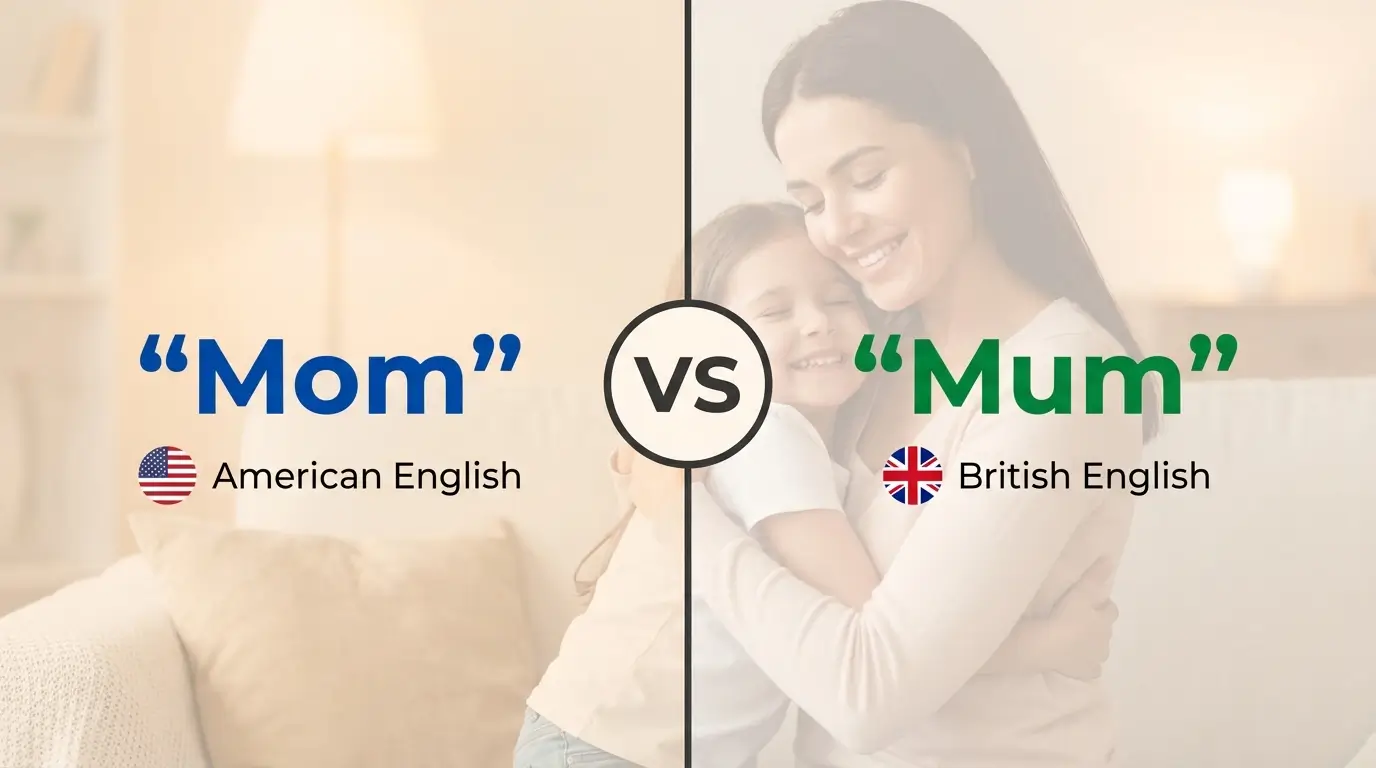
Both “mum” and “mom” are correct. “Mum” is used in British English, while “mom” is used in American English. They both mean mother.
Many people feel confused about “mum or mom.” Both words sound similar and have the same meaning, but they are used in different parts of the world. This can make it hard to choose the right one in writing.
Short answer: Use “mom” in American English and “mum” in British English.
This difference is not about meaning. It is about regional language style. People often search this keyword because they want to write correctly for their audience. Using the wrong form may not be a big mistake, but it can feel out of place.
Understanding this difference helps you communicate better. It also makes your writing look more natural and professional.
In this article, you will learn the origin, meaning, and correct usage of mum and mom. You will also see examples, common mistakes, and simple tips. By the end, you will know which word to use with confidence.
Mum or Mom – Quick Answer
- Mom → American English
- Mum → British English
Meaning:
Both words mean mother.
Examples:
- I love my mom.
- I called my mum yesterday.
Choose based on region.
The Origin of Mum or Mom
Both words come from early child speech sounds like “ma” or “mama.”
Over time:
- Different regions developed their own forms
- The United States adopted mom
- The United Kingdom used mum
Why the difference exists:
- Language evolved differently in each region
- Pronunciation influenced spelling
- Cultural habits shaped usage
Both forms have a long history and are widely accepted.
British English vs American English Spelling
There is a clear regional difference.
| English Type | Preferred Word | Example Sentence |
| British English | Mum | My mum is cooking dinner. |
| American English | Mom | My mom is cooking dinner. |
| Global Usage | Both | Depends on audience |
This is a vocabulary difference, not just spelling.
Which Word Should You Use?
Your choice depends on your audience.
Use mom when:
- Writing for US readers
- Creating content for American audience
- Following American style
Use mum when:
- Writing for UK or Commonwealth readers
- Following British English
- Writing for local UK audiences
Audience guide:
- US audience → Mom
- UK/Commonwealth → Mum
- Global audience → Choose one and stay consistent
Consistency helps your writing look clear.
Common Mistakes with Mum or Mom
Here are common errors:
| Mistake | Correction |
| Mixing both forms | Choose one style |
| Using wrong regional word | Match audience |
| Thinking one is incorrect | Both are correct |
| Inconsistent usage | Stay consistent |
Incorrect:
- My mom and my mum are here (mixed usage).
Correct:
- My mom is here.
- My mum is here.
Choose one form per text.
Mum or Mom in Everyday Examples
Emails
- “I will visit my mom this weekend.”
News
- “A mum shared her story online.”
Social Media
- “Love you, mom!”
- “Miss you, mum!”
Formal Writing
- “The child lives with his mum.”
Conversation
- “My mom is calling me.”
Both words are used daily around the world.
Mum or Mom – Usage Data
Why people search this keyword:
- Regional confusion
- Writing accuracy
- Language learning
Popular regions:
- United States → Mom
- United Kingdom → Mum
- India and Pakistan → Mixed usage
Usage contexts:
- Personal writing
- Social media
- Education and learning
Both words are common globally.
Comparison Table (Keyword Variations)
| Word | Status | Region | Meaning |
| Mom | Correct | US | Mother |
| Mum | Correct | UK | Mother |
| Mommy | Correct | US informal | Mother |
| Mummy | Correct | UK informal | Mother |
FAQs
1. Is “mom” correct?
Yes, it is correct in American English.
2. Is “mum” correct?
Yes, it is correct in British English.
3. Do both words mean the same?
Yes, both mean mother.
4. Which is more common worldwide?
“Mom” is more common globally.
5. Can I use both in one article?
No, it is better to stay consistent.
6. Is there a difference in meaning?
No, only regional usage differs.
7. Which should I use for global readers?
“Mom” is often a safe choice.
Conclusion
The difference between “mum” and “mom” is simple and clear. Both words mean the same thing, but they are used in different parts of the world.
“Mom” is used in American English, while “mum” is used in British English and many Commonwealth countries. There is no difference in meaning, so the choice depends only on your audience.
Understanding this helps you write more naturally. It also makes your content feel right for the reader. Using the correct word shows attention to detail and improves clarity.
If you are writing for a global audience, you can choose either form. However, it is important to stay consistent throughout your writing.
A simple rule is to use “mom” for US readers and “mum” for UK readers. Once you know your audience, the choice becomes easy.
Clear and correct language helps your message connect better with readers.
Learn more:
Savor or Savour: What’s the Difference? (guide 2026)

I am Olga Tokarczuk, a Polish novelist and essayist whose work is widely studied for its rich vocabulary, precise language, and literary expression. My writings are often referenced in academic and linguistic contexts for their clarity of diction and thoughtful use of words. I am a prominent figure in modern world literature.